Commercial EPDM Roofing in Aurora, IL
Roof Systems
Map EPDM seam condition before selecting the repair
A curled EPDM seam can remain watertight until movement opens its edge, so the repair decision starts with the bond and the membrane around it. We inspect the lap, flashing, termination and adjacent insulation, then map the confirmed boundary by roof section. Aurora averages about 121 days below freezing annually, and repeated temperature changes can stress details that hold water. The record separates a seam repair from a broader attachment or moisture concern. A roof inspection establishes what is tested and what still needs confirmation.
Properties near Montgomery Route 30 and Fox Valley Mall reflect different commercial settings across the Aurora service radius. Neither location predicts an individual roof's EPDM thickness, adhesive or deck. We review system documents, prior repairs and field conditions before specifying a patch. The facility director receives a section map with seam observations, water paths and approved quantities. That gives the owner a clear basis for repair, recover or replacement review.
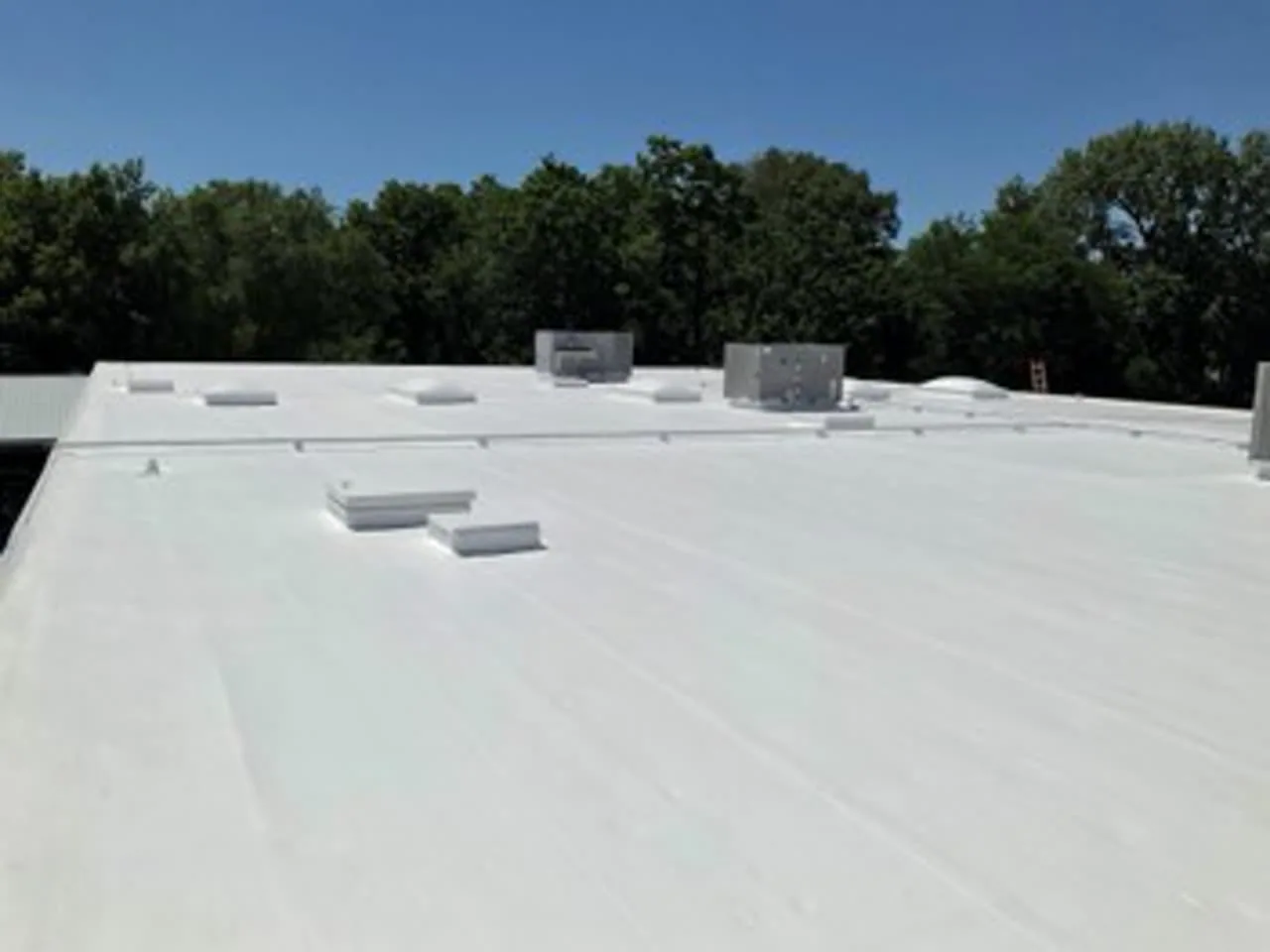

How are the EPDM seams holding?
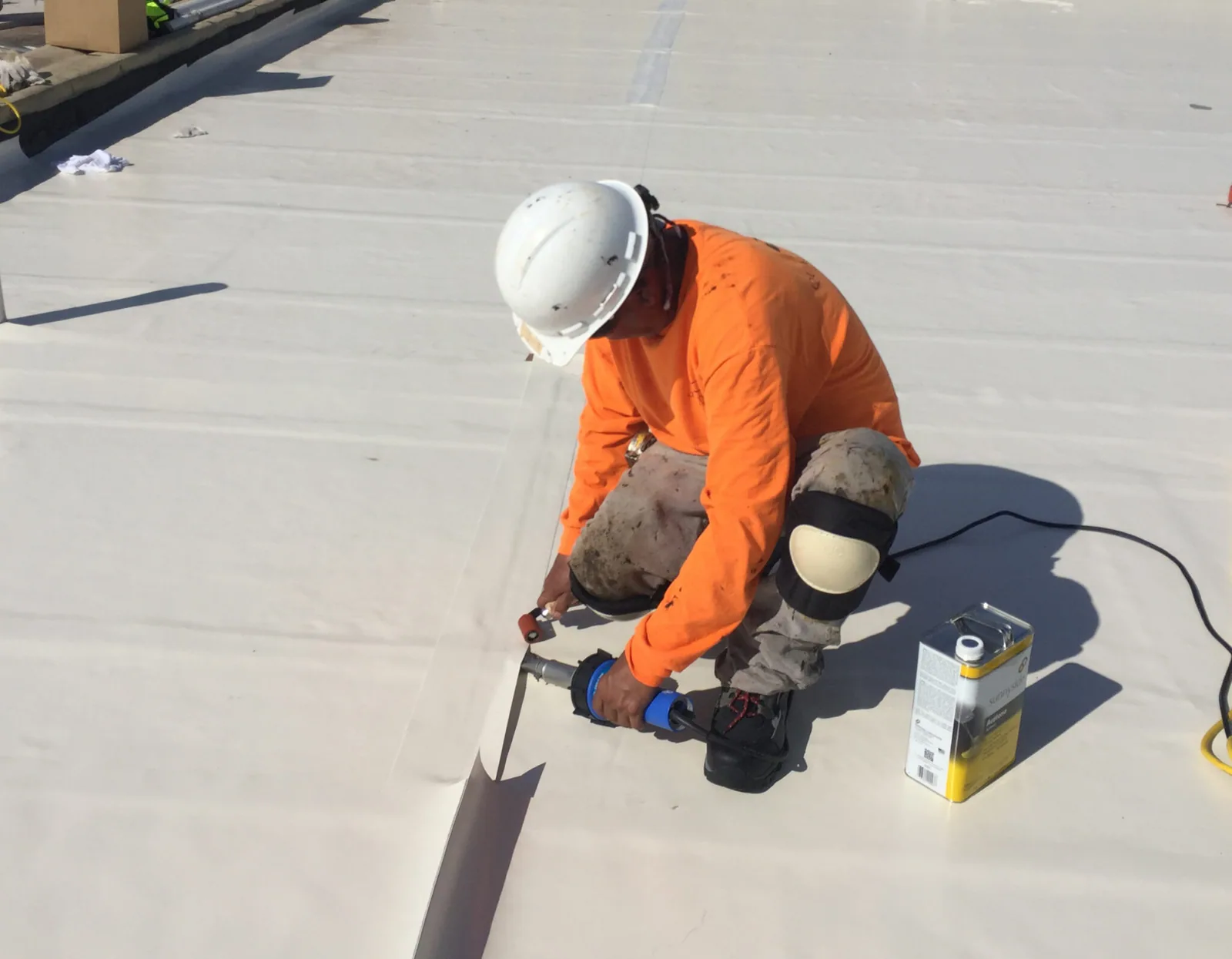
EPDM is a flexible synthetic-rubber membrane commonly joined with seam tape or adhesive systems. We identify the existing construction from records and field details, then inspect laps for fishmouths, edge lift, contamination, adhesive failure and patch movement. A small gap may be repairable when the surrounding sheet is clean and stable. If material is brittle, damaged or repeatedly patched, we note the condition and test whether a repair will bond. The repair plan follows the product requirements for surface preparation and compatible materials.
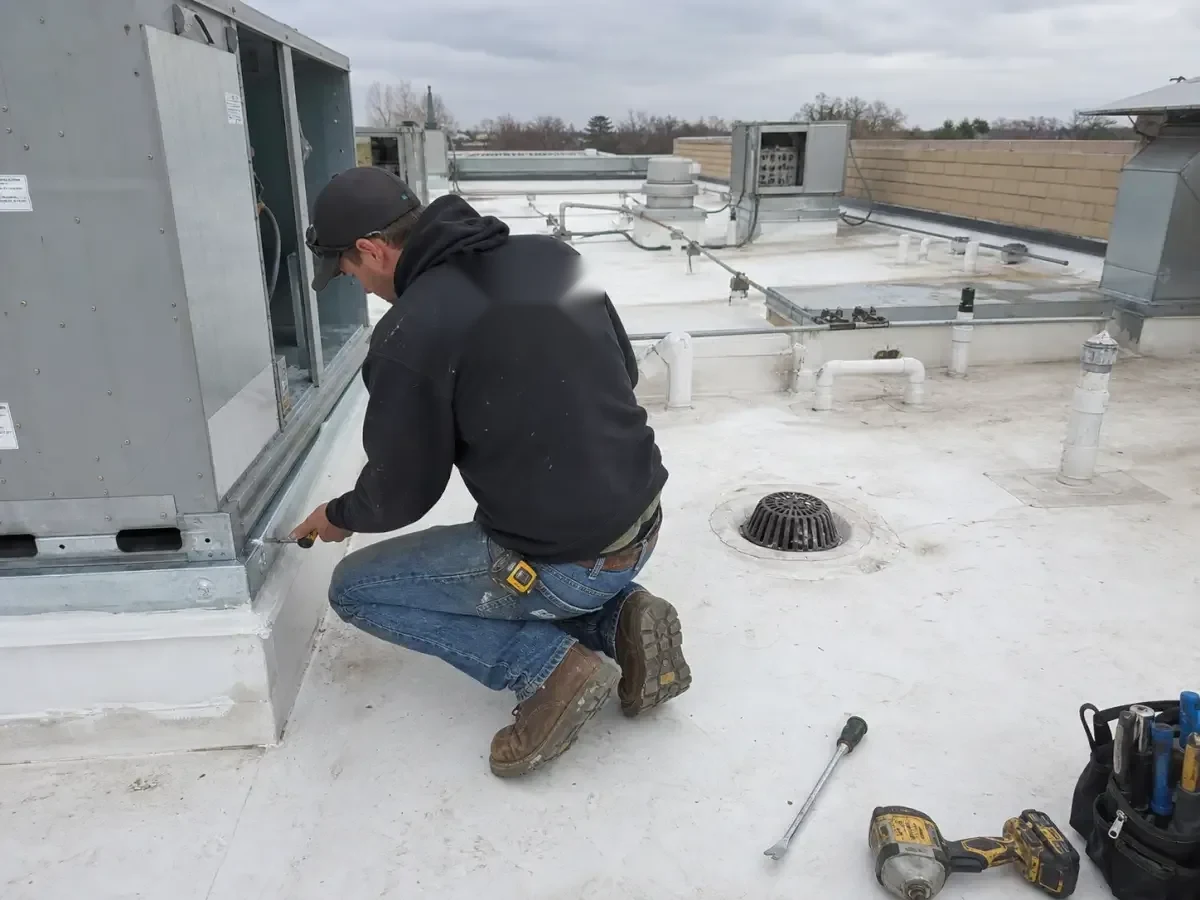
Flashings at drains, curbs, walls and pipes need separate attention. We inspect corners, termination bars, boots and metal transitions for movement or open laps. At low points, water can stay against the seam and reveal a drainage issue rather than an isolated adhesive failure. EPDM roof maintenance should account for about 37.7 inches of annual rain in Aurora, with wetter weather from May through September that can expose weak seams and drains. We map the drain path and test suspect insulation before covering it. The scope identifies whether water has affected only the sheet or the assembly below.
Which EPDM repair method fits the damage?
A repair may use compatible EPDM material, seam tape, adhesive or flashing components, depending on the existing system and location. We prepare the membrane as required and extend the repair onto sound material. At a pipe or curb, the detail may need a formed boot or reinforced flashing rather than a flat patch. We record the proposed method and its boundaries so a later inspector can distinguish original construction from repair. If the surface has residue or an unknown coating, an approved test area can check compatibility before larger work. The next system can be compared with TPO or PVC based on the building’s exposure and maintenance requirements.
Where wet insulation, extensive seam failure or recurring leaks affect multiple sections, repair may no longer address the documented quantity. We compare the tests, patches and remaining condition with recover and replacement options. A recover assessment checks attachment, moisture and added height; a replacement assembly review can account for insulation and drainage changes. The owner sees which sections qualify and where the evidence supports removal instead of another layer.
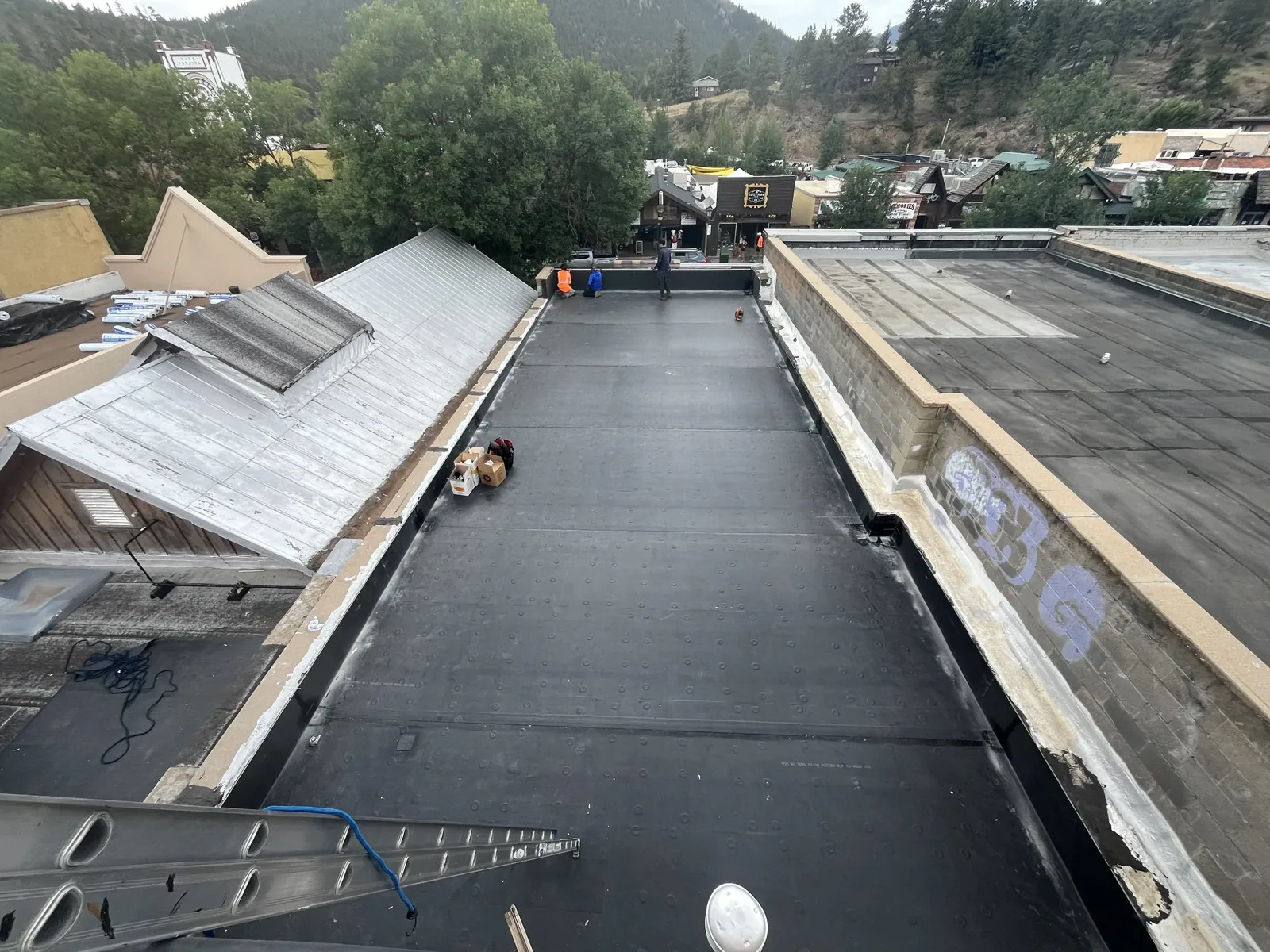
What maintenance keeps details visible?
EPDM inspection should include seams, patches, flashings, walkway edges, equipment supports and drains. Rooftop service can shift a walkway or damage a membrane with a tool or fastener. We photograph new observations and compare them with prior repair records so an old patch is not misclassified as a fresh failure. If a leak appears inside, we trace likely water movement across the roof rather than assume the nearest seam is the source. A leak investigation can map entry points and interior reports together.
Freeze-thaw and summer heat affect details in different ways. EPDM repairs face both summer surface heat and winter cold: Aurora's typical July high is 83.9°F, with about a dozen days above 90 each year. We check exposed seams, penetrations and edges after seasonal changes and note repairs that should be completed before weather shifts. A maintenance schedule can record condition bands and dates for each section. It also gives the facility contact a place to log work by equipment contractors that may cross the membrane.
What affects EPDM scope and schedule?
Cost depends on membrane condition, seam length, surface preparation, repair material, flashing complexity, insulation tests, access and any deck work. A repair should list its measured perimeter and identify how much adjoining material is included. Recover or replacement quantities depend on tested moisture, attachment and edge conditions. We separate known work from allowances for hidden layers, and state how any additional exposed damage will be photographed and measured before an owner approves it.
For EPDM work that changes the roof build-up, project staff should verify Aurora's current building provisions and Illinois commercial energy requirements. The project team confirms applicable code and permit requirements for the actual scope. Installation timing depends on dry substrate, temperature limits and the forecast. For a facility near Route 30 with delivery hours or active operations, the site contact can identify access windows and staging. We include those conditions in the sequence rather than assuming the roof can be worked at any hour.
What belongs in the EPDM history?
Keep the original product data, membrane thickness, attachment, seam method, repair materials, test locations and photos with the roof plan. Closeout notes the work completed, section IDs, weather interruptions and concealed conditions. If a warranty or inspection process applies, the owner retains its requirements with the project file. A future repair then has a record of which adhesive, tape or flashing material was used, where it was installed and what condition remained outside the scope.
For a portfolio across Montgomery and the Fox Valley, consistent labels help compare dates and condition bands while keeping assemblies distinct. A condition report preserves open tests and maintenance priorities. If the building is being considered for a reflective surface, compare product properties after the substrate and drainage review. The final choice should reflect the tested roof, planned use and approved project documents.
Can EPDM seam tape be replaced without removing the sheet?
A section of tape may be replaced when the EPDM and bonding surface can be prepared and the surrounding membrane remains sound. We inspect the lap, test suspect material if needed and define the replacement boundary. Where the sheet is brittle, contaminated or repeatedly failing, a patch may not address the underlying condition.
How do you repair an EPDM pipe penetration?
We identify the membrane and pipe size, inspect the boot and surrounding sheet, then select a compatible flashing method. The repair must extend onto prepared, sound EPDM and remain clear of standing water. If the support or pipe moves, we coordinate with the relevant trade before closing the detail.
Can an EPDM roof be coated?
A coating requires compatibility with the existing EPDM, surface preparation, adhesion testing and a sound assembly. We do not assume a coating will bond to a rubber membrane. The owner receives test results, repair quantities and product requirements before any restoration area is approved.
What indicates that EPDM needs replacement instead of another repair?
Repeated seam failure, widespread wet insulation, degraded membrane or unstable attachment can move a section beyond an isolated repair. We map those findings and compare them with core results and repair history. The recommendation identifies the tested area and the boundary that supports recover or replacement.
How should EPDM be checked after winter?
Inspect seams, flashings, edges, drains and patches for movement after freezing conditions. We compare new observations with the prior section map and check whether water remains at the same low points. If damage is suspected, photographs and a measured repair quantity create a baseline before more work proceeds.
Request a Roof Assessment
Send the Aurora address, facility contact, EPDM system records and repair history. We will inspect laps and flashings, test suspect areas and document a section-level recommendation for repair or replacement.
Call 555-555-5555 or send the form and we will set a time to walk the roof.