Commercial Roofing for Manufacturers in Aurora, IL
Industries We Serve
Tie the roof scope to the production window
A drip above production equipment can force a line change before the roof defect is located. We inspect the reported section, check nearby penetrations and drainage, then distinguish visible damage from a moisture area that still needs testing. The facility team gets a quantity tied to the affected roof zone and an access sequence that reflects production, maintenance and loading requirements.
Aurora's manufacturing base includes Entegris and ATMI Precast, with employers spanning semiconductor polishing equipment and precast concrete. The Sugar Grove industrial area west of Aurora Municipal Airport also contains commercial and industrial property, while US 30 and I-88 connect regional industrial routes. Those facts give the market context; the plant's specific process, roof assembly and access controls determine the work scope.
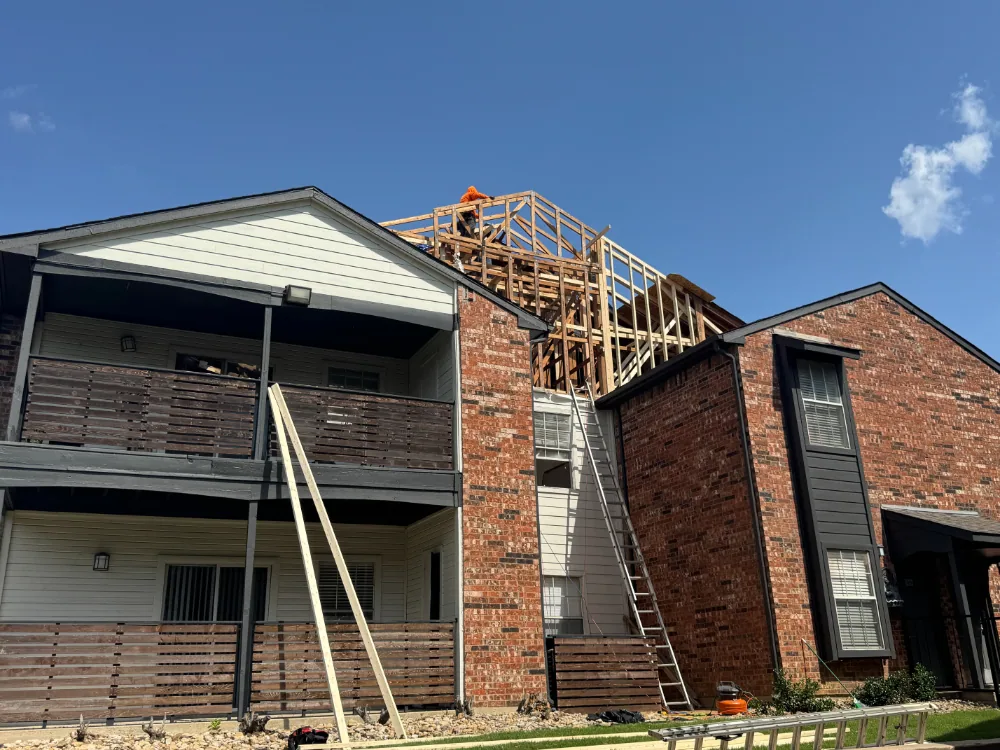
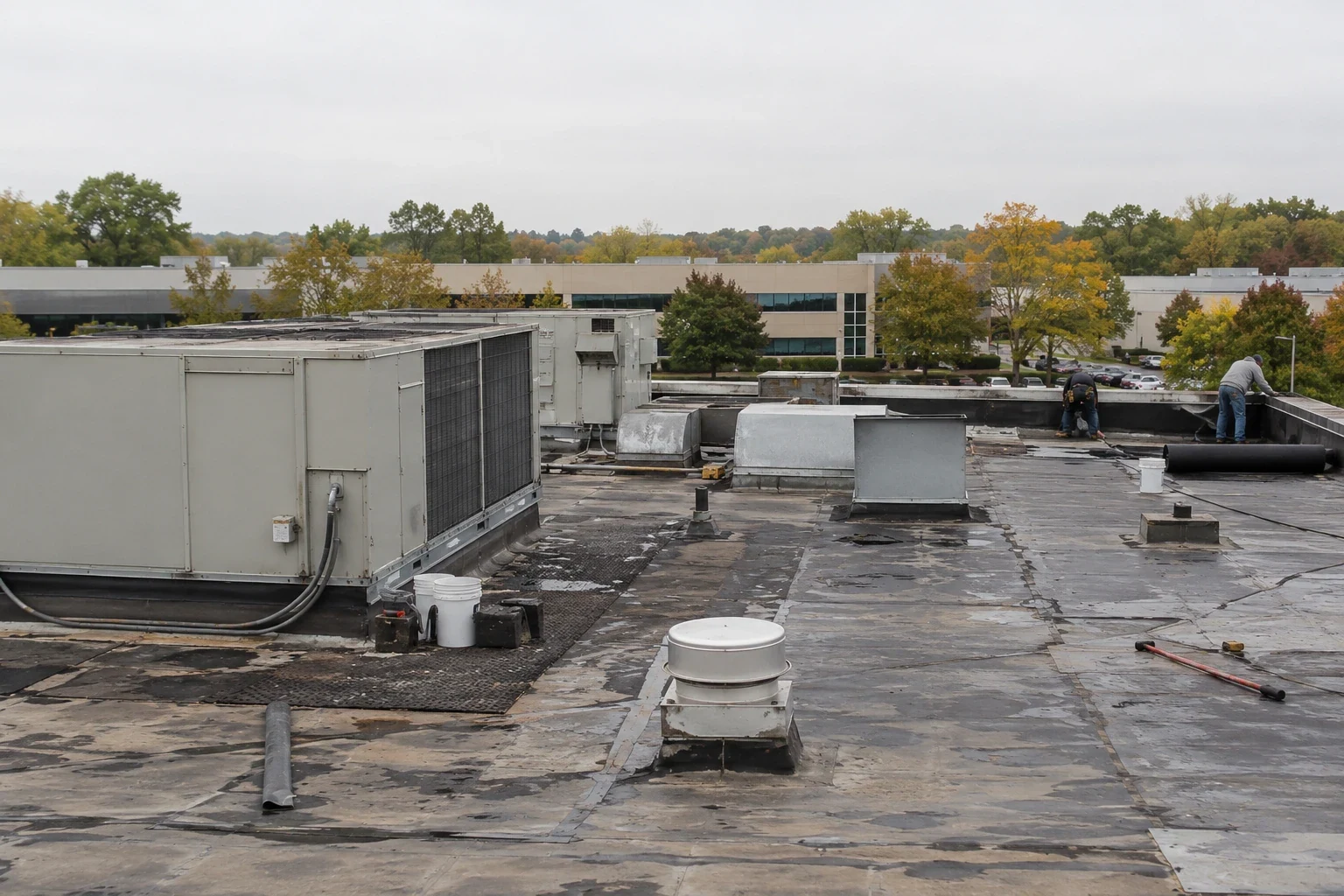
Which process area sits below the roof issue?
We record the line, room or support area affected, report time and any equipment service history, then inspect the roof section above and upslope. Water can follow a deck or insulation before reaching the point where production staff see it. We check seams, curbs, penetrations, skylights, drains and prior repairs, then link photographs to the roof plan. Any restricted area or untested portion is identified in the inspection notes.
If moisture may extend beneath the membrane, infrared patterns can help select tests. Core samples confirm only the locations opened, so we map sample points and keep remaining areas separate. Process equipment may require shutdown authority or protection below; those items are coordinated with plant engineering before a curb is disturbed. A plant roof inspection can support a repair decision, targeted sampling or separate capital planning.
How can work fit the production calendar?
The site contact identifies production shifts, sanitation or clean-area rules, loading peaks, crane or lift access, equipment shutdowns and approved roof routes. We define the active work zone and material staging location, then record who releases an area and who accepts the handoff. If a production line must stop or be covered, the sequence names that step before membrane removal. The facility can then coordinate labor and production against a defined roof boundary.
Aurora's monthly precipitation approaches four inches from May through September. Each shift needs a secure dry-in line and a verified tie-in before work stops. We protect drains against debris and record what was completed. Winter adds repeated freeze-thaw exposure, while hot summer roof surfaces can change safe working hours. A phased scope can follow shutdown windows by building or bay if the boundaries remain watertight and the plant's approved access rules are followed.
Is a repair compatible with the production risk?
A local seam or curb repair can be sufficient when surrounding membrane and insulation remain serviceable. Recurrent leaks, repeated repairs near process equipment or confirmed wet insulation may indicate a larger section needs replacement. We compare test results, equipment access, drain paths and the repair history, then set the approved quantity for each area. The production consequence is considered in sequencing, while the roof condition determines the technical scope.
Recover or coating may be possible when the assembly is dry, stable and compatible with another layer. Equipment supports, roof drains and perimeter transitions need review before adding height. A recover assessment documents attachment and transition constraints. For a large manufacturing building, plant roof planning can align details with operations; a warehouse roof review may focus more heavily on shipping access and storage areas.
What drives manufacturing roof cost and downtime?
Cost and schedule follow the confirmed area, penetrations, roof height, access equipment, surface preparation, tear-off and plant controls. Shutdowns, containment or interior protection can add coordination steps. If the roof opening exposes concealed deck damage, the crew documents its location and proposed quantity for approval before proceeding. The estimate should make production dependencies visible so the facility can compare a single work window with a phased repair plan.
Aurora averages about 121 days below freezing annually and about 7.7 days below zero Fahrenheit. Those temperatures can affect preparation and cure, while seasonal rainfall sets limits on open roof areas. We match the work window to material requirements and the plant schedule. Emergency service can respond at any hour, but permanent roof work requires safe access, prepared surfaces and a confirmed shutdown contact where equipment is involved.
How should roof work join maintenance records?
Keep the roof plan, leak tickets, equipment map, test points, production-area notes, approved quantity and closeout photographs together. Each record should identify the building section, assembly, detail repaired, date and any deferred condition. If a leak returns, plant staff can compare its timing with equipment operation and review the last roof intervention. A maintenance date or equipment change can trigger a targeted inspection of the affected curb or seam. Before new process equipment is placed, compare its proposed support and service path with the existing roof map. The facility can then route flashing, structural and mechanical details for review before crews penetrate or load the membrane.
Entegris and ATMI Precast are among Aurora's major manufacturers; the wider Fox Valley includes industrial properties in the Sugar Grove airport district and North Aurora's I-88 employment areas. Each facility has distinct process and roof conditions. A condition report retains testing limits; logistics roof coordination addresses another operational setting, while a property manager program can keep service history connected to the owner file. The Sugar Grove industrial district and North Aurora I-88 area provide location references.
Can roofing work be done during a production shutdown?
A planned shutdown can create roof access, but the work area and sequence still need to match the confirmed repair scope. We coordinate with plant engineering on equipment, process controls, lift routes and handoff authority. A defined section can be opened and closed within the available period when weather and material requirements support it.
How do you protect equipment under a roof repair?
The plant contact identifies sensitive equipment, active lines and required coverings before the roof is opened. We document interior protection and any shutdown or restart procedure that the facility provides. The roof scope identifies the location and tie-in, while plant engineering directs equipment controls and process readiness.
What testing is useful when a production ceiling shows moisture?
We inspect the roof path and use infrared patterns, when appropriate, to select core samples. Each test confirms only the sampled area. A map of test points, visible damage and untested sections gives the plant a clearer basis for repair or replacement quantities without extending a finding across the whole roof.
How should a manufacturer prioritize roof repairs?
Compare active water entry, affected production, roof condition, test results, access windows and repair history. We list immediate work and deferred items separately, with a review date or condition trigger. That lets the plant coordinate production downtime with confirmed roofing needs rather than an unsupported allowance.
Request a Roof Assessment
Share the Aurora plant address, engineering contact, affected production area, roof plan and shutdown calendar. We can inspect the section, document quantities and coordinate a controlled work sequence.
Call 555-555-5555 or send the form and we will set a time to walk the roof.