Commercial Roof Leak Repair in Aurora, IL
Commercial Roofing Services
Trace the leak to a documented roof section
A ceiling mark beneath a rooftop unit may point to a failed curb, a nearby seam or a drainage path carrying water from another section. We inspect above the symptom, follow the likely route and record the evidence before selecting a repair. Aurora averages about 121 days below freezing each year, so water retained at an opening can freeze and expand through winter cycles. The first visit separates an active entry point from areas that need testing. A roof inspection maps the condition to the building plan.
For a facility along Route 59 or near Aurora, interior access and operations can shape the investigation sequence. We coordinate with the building contact to reach the affected room and roof area, then note time, weather and any operating equipment near the leak path. Rush Copley serves the wider Fox Valley, a reminder that institutional sites can have active spaces below the roof, though the subject building's own access rules guide our work. The record identifies confirmed findings, suspected paths and areas not opened for testing.
How do you trace the water path?
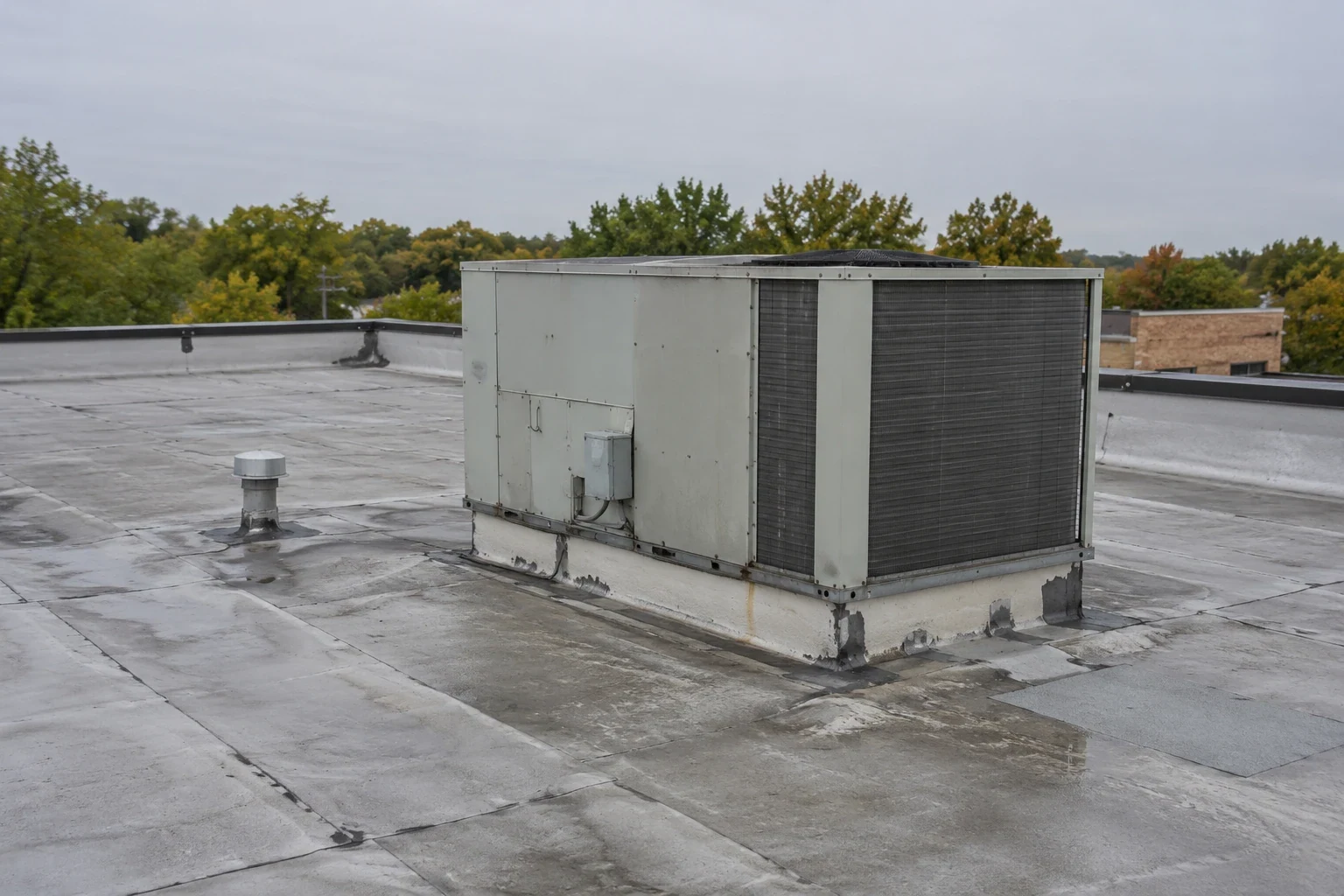
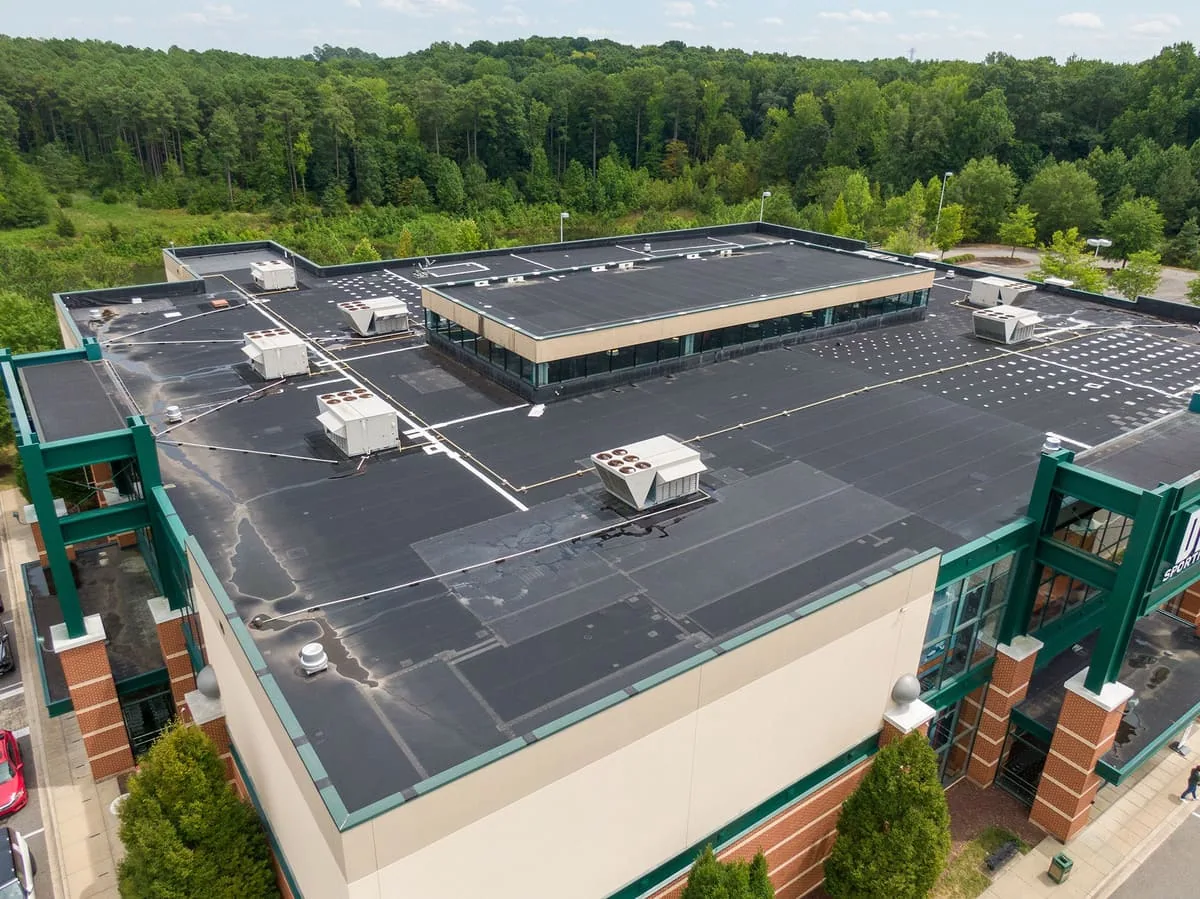
We start with the interior report: where water appeared, whether it recurs during rain or thaw, and what equipment or ceiling conditions sit above it. On the roof, we check membrane seams, penetrations, curbs, wall transitions, drains and scuppers. Water may travel along a deck or insulation interface before it becomes visible, so the closest rooftop feature is not automatically the source. Photos and a marked plan show each inspected point and the evidence that supports the working diagnosis.
If the surface review leaves uncertainty, we recommend a targeted test area rather than opening a broad section without a reason. Moisture readings and core samples can show whether insulation is affected, while a controlled water test may help isolate a detail when conditions allow. We agree on the area and method with the facility contact, then document the result and closure. A moisture survey can support the map, and drain and scupper review checks whether water is being held or redirected near the reported location.
What should be stabilized first?
Active water needs immediate protection for the space below while the permanent repair is defined. We can install a temporary tarp or dry-in when roof conditions and access allow, then note its limits and the area it protects. Temporary cover is not the final repair; it buys time to inspect the surrounding assembly and select compatible materials. The work log records when protection went in, who received the update and what monitoring remains necessary until the permanent work is complete.
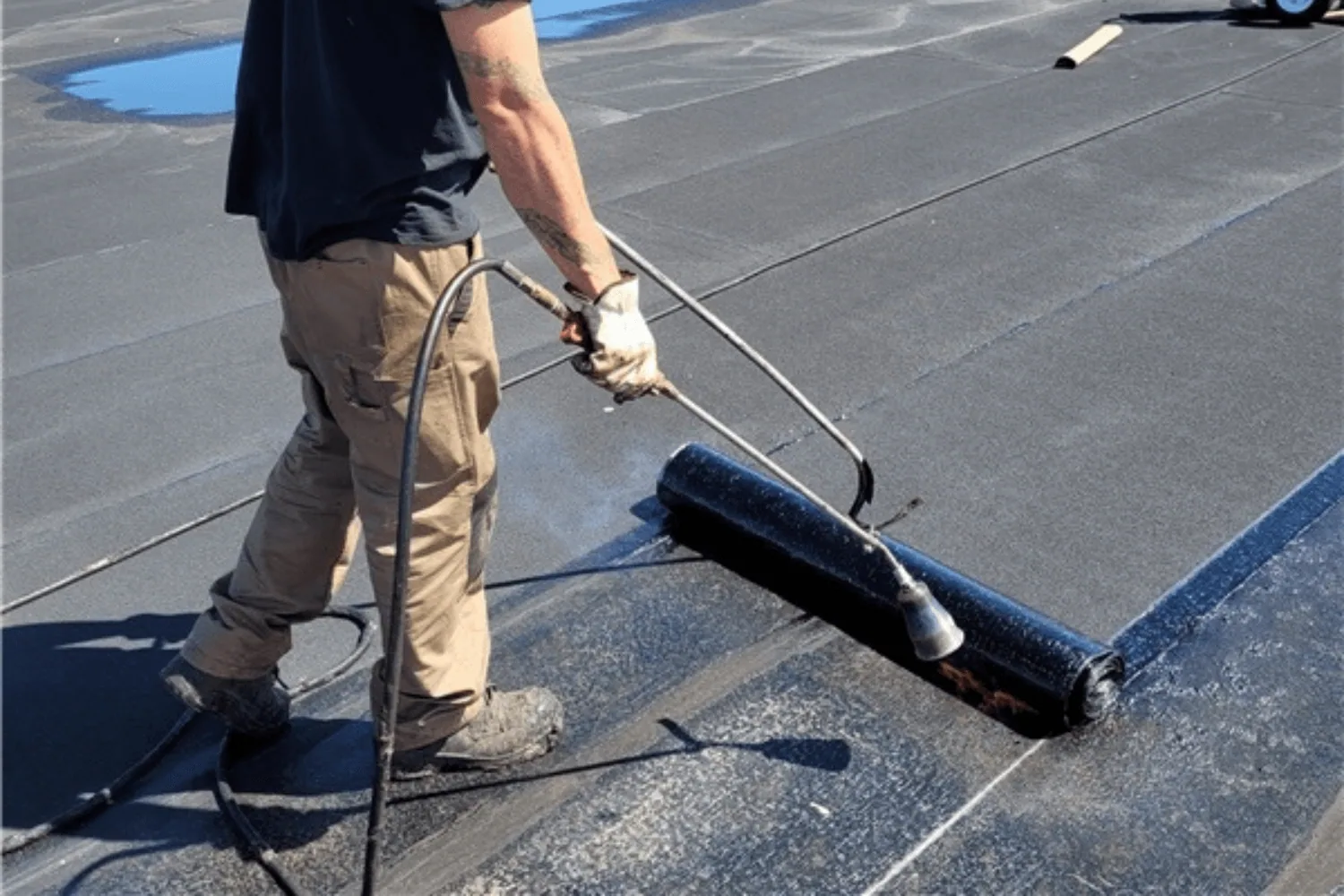
For a leak around flashing, seam movement or puncture, repair materials must match the membrane and substrate. We remove loose or contaminated material only within the approved work area and extend the repair to sound surfaces. When insulation appears wet, we quantify the tested zone and show whether removal is recommended. A flashing detail repair or seam repair can be scoped with that evidence rather than treating the ceiling symptom as the full extent of damage.
How is the building kept in service?
Leak investigation may cross offices, patient areas, classrooms or production space. We coordinate room access, ceiling access and roof routes with the designated contact and keep the inspection window limited to the evidence needed. In a health facility or school, that can mean working around scheduled use and protecting interior finishes while technicians move between levels. The local building mix includes Rush Copley and two public school districts, but each site provides its own restrictions and contact chain. The written plan captures those requirements before work begins.
Aurora's spring and summer months bring higher monthly precipitation, so temporary protection and forecast review matter when a repair cannot be completed in one shift. We plan the daily boundary, secure tools and materials, and leave a clear note about any area awaiting a follow-up test. For businesses near the Fox Valley Mall district, loading and customer routes may also affect setup, while the leak path itself remains a roof condition. A documented emergency response is available when the opening needs immediate dry-in.
What closes the leak investigation?
The closeout shows the original symptom, roof location, diagnosis, work performed and verification result. We label photographs by section and distinguish the permanent repair from any temporary measure. If the leak continues, the record narrows the next test instead of repeating the same inspection. It also identifies adjacent areas that were not tested, helping the owner decide whether broader moisture mapping belongs in the maintenance plan. The facility manager can connect the finding to prior repair history and future capital dates.
Freeze-thaw conditions can revisit a repaired detail, so the observation date and next review window belong in the record. We note whether drainage, insulation or nearby flashing needs monitoring and who should be notified if water returns. A condition report can preserve the finding across a property portfolio; a maintenance visit can check the repaired area after seasonal change. The file gives the owner a specific decision point rather than an unbounded watch item.
Why can water appear far from the roof opening?
Water can move along a deck, insulation joint or framing before it reaches a ceiling. We inspect the roof area above and around the symptom, including drains and penetrations, then map the likely travel path. Where the evidence remains ambiguous, targeted testing can reduce the search area. The repair scope identifies the source we confirmed and marks any remaining uncertainty.
Can you stop an active leak before permanent repair?
Temporary tarping or dry-in can limit further exposure when roof access and conditions are safe. We record the covered area, installation time and limitations, then schedule the inspection or permanent repair needed to close the opening. Temporary protection does not establish how much insulation may be wet. We evaluate that separately and keep the owner informed about the next decision.
What information should the facility contact provide?
A timeline of the leak, affected rooms, recent roof work, equipment schedules and access rules helps direct the visit. Photos of the interior mark can show how the event changed, while roof plans help identify sections and routes. We still verify the actual assembly in the field. The inspection record lists information supplied by staff separately from conditions we observed.
When is moisture testing useful?
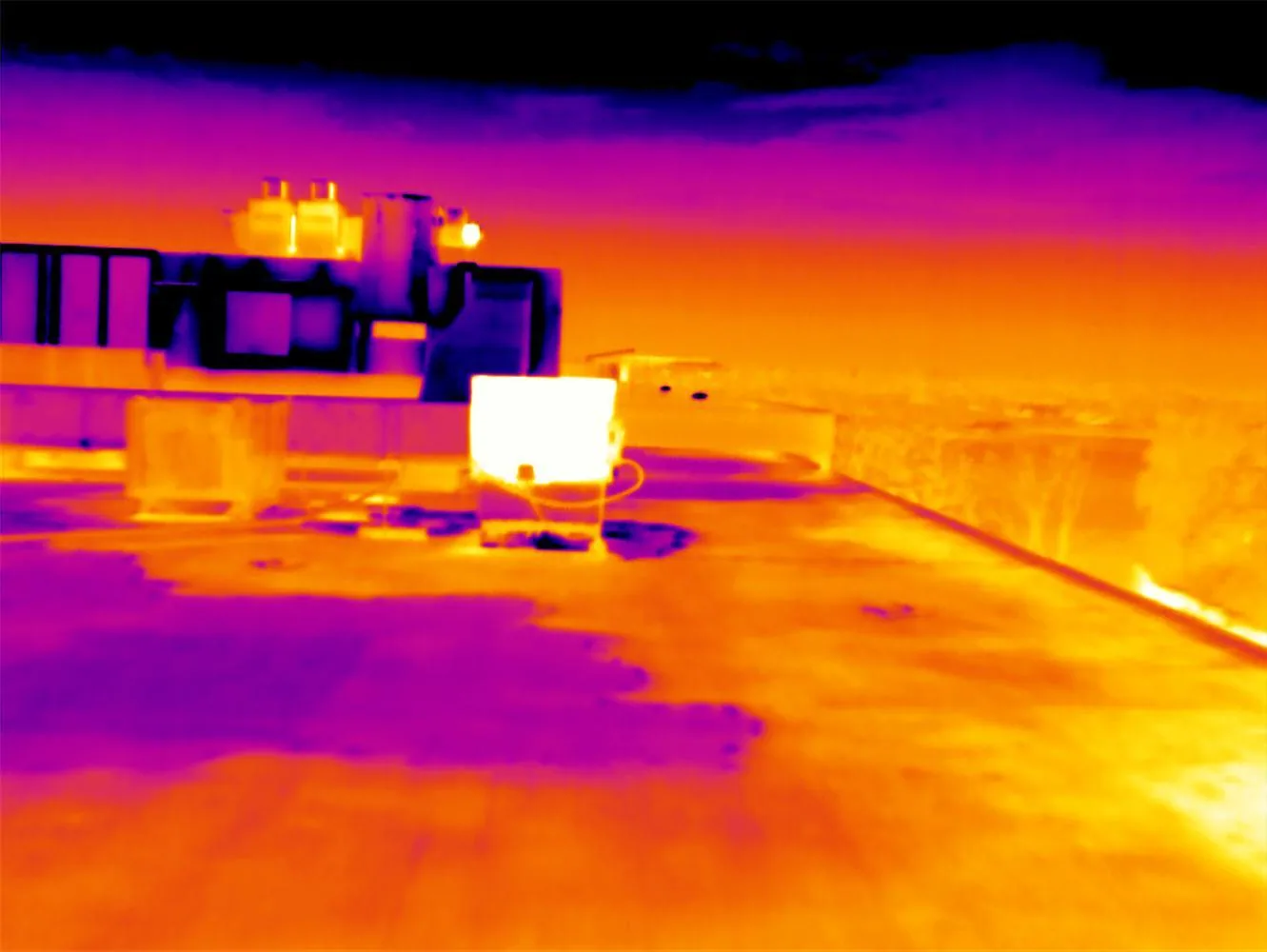
Testing is useful when the leak path may have affected insulation or the visible symptom does not identify the extent. We choose locations based on roof construction, infrared indications and the pattern of water entry, then note the tested boundary. A single test point does not establish a roof-wide condition. The findings can distinguish local repair from a larger section evaluation.
Do you respond outside normal business hours?
Emergency calls are handled at any hour, including weekends and holidays. We first confirm the building contact, access point and immediate interior risk, then stabilize the opening if conditions permit. Permanent materials and expanded testing can follow once the affected roof section is accessible. The response note states what was protected and what remains to be resolved.
Request a Roof Assessment
Share the Aurora address, facility contact, affected room and available roof records. We will inspect the roof path, stabilize active water where practical and document the repair boundary.
Call 555-555-5555 or send the form and we will set a time to walk the roof.