Commercial KEE Roofing in Aurora, IL
Roof Systems
Match the KEE repair to the installed product
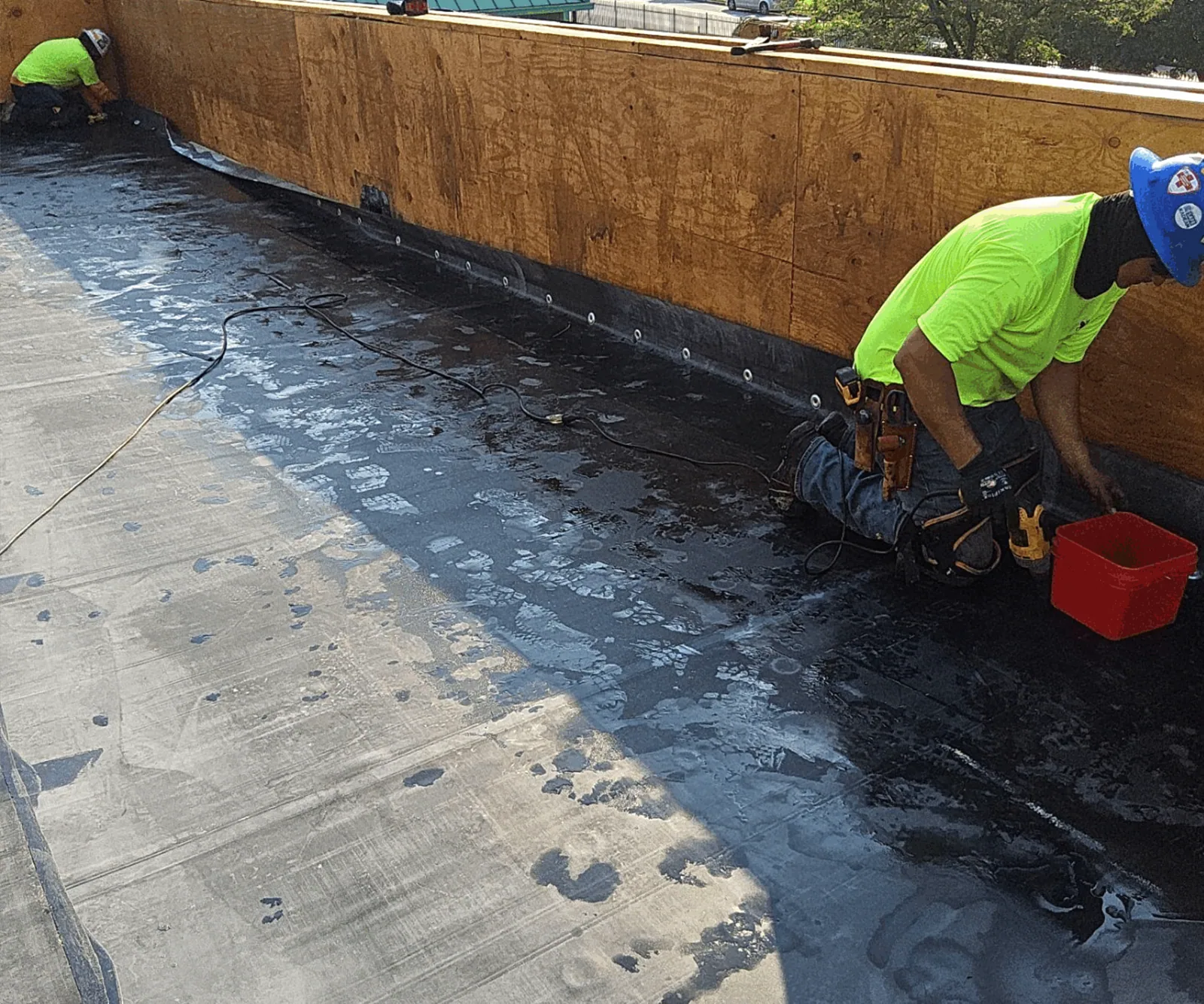
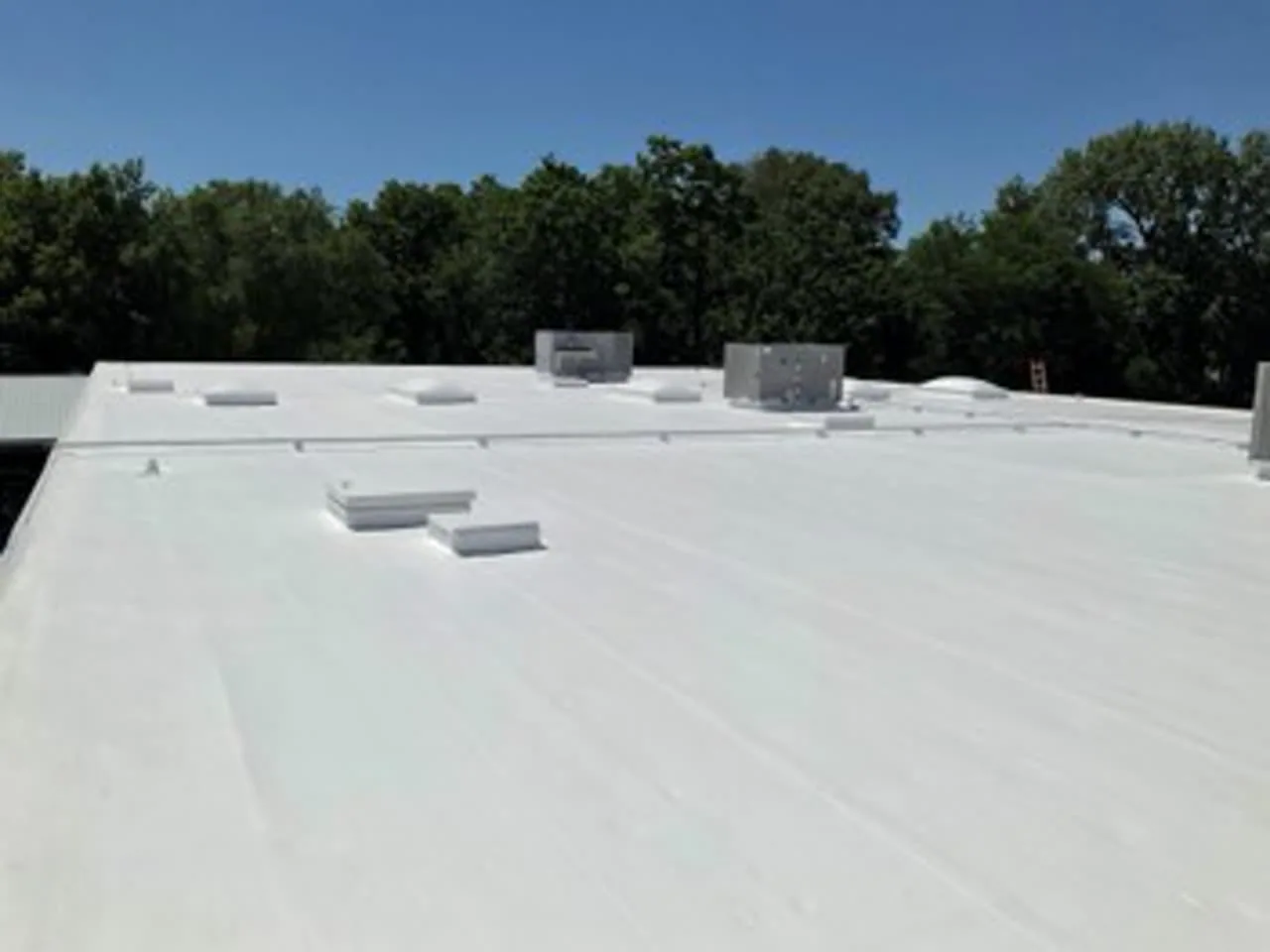
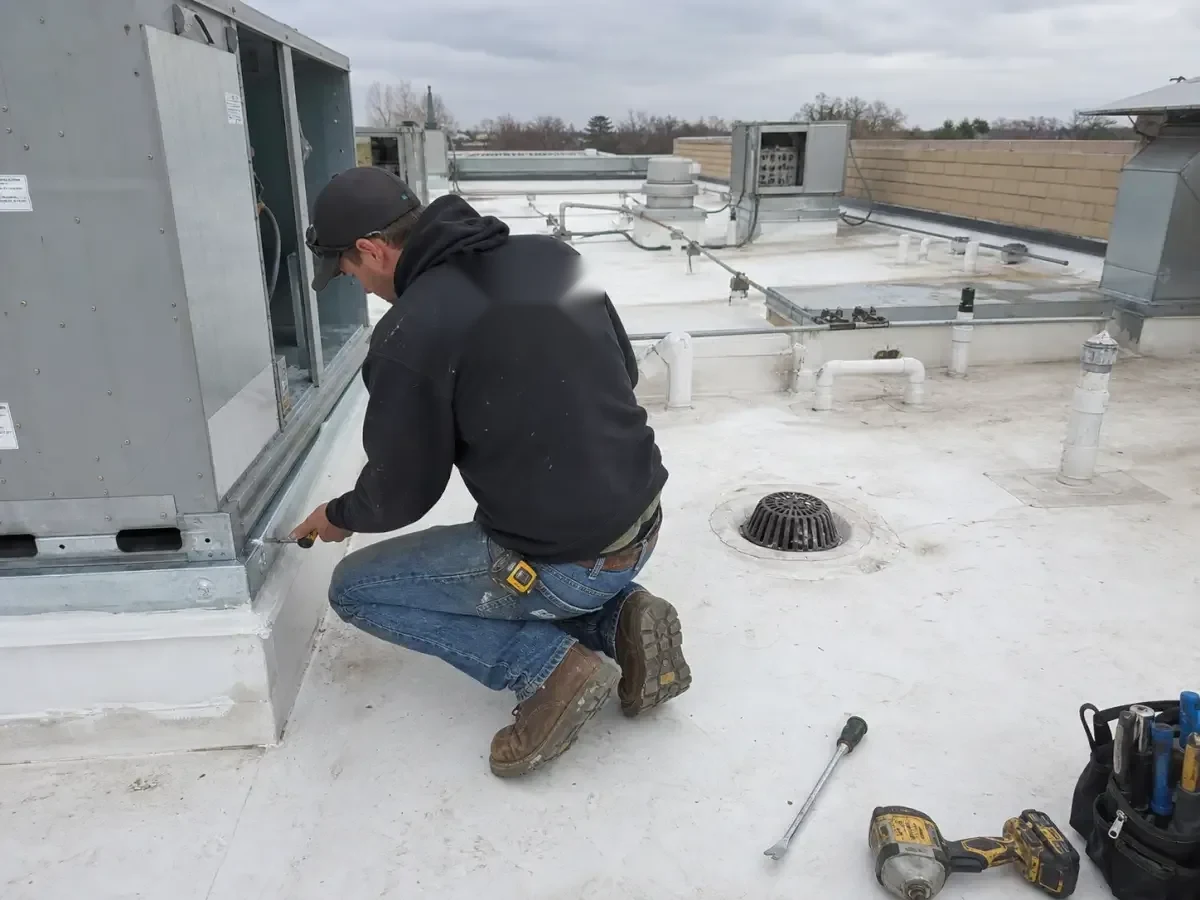
A KEE/PVC membrane beside an exhaust hood can show surface change before a seam opens. We inspect the installed material, discharge path, welds and flashing, then check whether the condition is limited to the exposed area or continues beneath it. Aurora's normal July temperature peaks at 83.9°F, and summer includes roughly twelve 90-degree days, factors worth checking against the selected KEE product's application range. That heat exposure makes the actual product data and maintenance record relevant, while the field condition determines whether a repair remains viable.
Retail and restaurant properties near Route 59 or Batavia Randall Road retail corridor may present different exposure patterns. We verify the membrane and exhaust discharge at each address from project records and field details, then map seams, penetrations and repairs by roof section. A roof inspection establishes a condition band before a KEE repair or replacement quantity is approved.
What does the KEE surface tell us?
KEE membranes combine PVC with a ketone ethylene ester modifier, but formulations and reinforcement vary by product. We identify the installed material and thickness where records are available, then inspect welds, surface condition, flashing, punctures and attachment. Grease, oils or chemical exposure should be compared with the selected manufacturer's compatibility guidance rather than judged from the membrane name alone. We photograph the affected area and note whether the sheet remains weldable. If material identity is uncertain, testing or additional records may be needed before repair.
Seams and transitions deserve close review because a surface change near a hood can coexist with a separate curb or drain failure. We inspect curb corners, exhaust duct flashing, nearby drains and the path of runoff. If a repair crosses a field seam, the work plan identifies the proposed weld and preparation. Aurora receives about four inches of precipitation per month from May through September, so we keep suspected moisture separate from surface marks. Water at an opening can reveal a weak transition; we test suspected insulation and keep confirmed wet areas separate from visual marks.
Is a local repair still supportable?
A patch may be practical when the existing sheet can be prepared and welded, adjoining material is sound and the damage is isolated. Repeated weld failure, widespread surface degradation or wet insulation can move the recommendation toward section replacement. We compare the condition with the repair history and identify how much new membrane is required beyond the damaged edge. The facility director receives a measured quantity and any compatibility test results, not a general statement that every KEE roof needs the same fix.
System choice should reflect the building's discharge, rooftop traffic, attachment and maintenance needs. We compare KEE with PVC or TPO only after reviewing the exposure and product requirements. If moisture or attachment remains uncertain, moisture testing can guide confirmation. A recover assessment separately checks whether another layer is allowed and technically suitable.

Which rooftop areas need routine review?
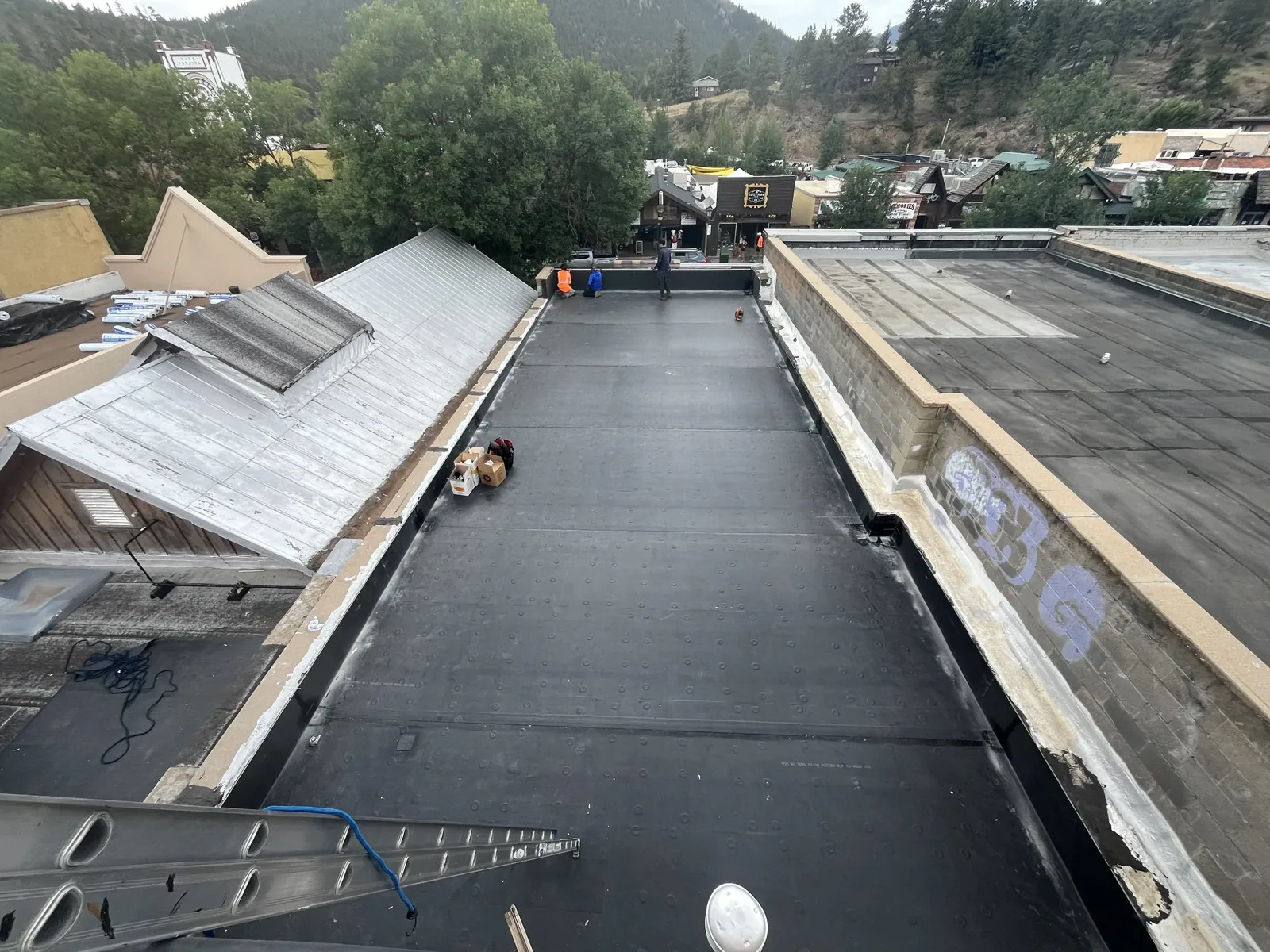
Kitchen exhausts, grease ducts, unit curbs and service paths can expose a membrane to heat, residue and repeated foot traffic. We inspect the perimeter of these areas, check for tool cuts or support movement and record any discharge that reaches the roof. If a mechanical contractor has cleaned or replaced equipment, the service date can help explain changes in the surface. Our roof inspection identifies where curb flashing, membrane and equipment service need coordinated correction; exhaust design and air balancing remain with the mechanical scope.
Drains and scuppers should remain open and accessible. Grease and debris can change where water collects, increasing contact at a seam or penetration. We document the outlet and surrounding membrane, then distinguish cleaning from regrading or repair. A drainage assessment can check the water path, while a curb and support review can define work around a unit. The records identify roof sections that equipment or access restrictions prevented us from inspecting.
What belongs in a KEE estimate?
Estimate quantities depend on membrane area, seam length, surface preparation, weldability tests, flashing details, drains, curbs, access and insulation condition. We separate field membrane, detail repairs and any replacement section. If a concealed condition may affect the quantity, the proposal states the allowance and how it will be measured after opening. This lets an owner compare repair with replacement on the same tested basis. Equipment moves or temporary protection are listed separately when required by the facility.
A KEE assembly change is checked against the Aurora building code cycle effective January 1, 2026, along with applicable Illinois energy provisions. The project team confirms which requirements apply to the actual scope and insulation changes. We flag design and permit questions before procurement. Installation timing also depends on dry substrate, product temperature limits and site operations. An occupied-work sequence can coordinate exhaust service, deliveries and temporary protection with tenant hours.
How should KEE repairs be tracked?
Keep manufacturer data, thickness, reinforcement, attachment, seam layout, compatible repair products, test results and section photos with the roof plan. Closeout notes the completed welds, replaced material, field changes and any area left for monitoring. If the owner has warranty or maintenance documents, they should stay with the material record. Future crews can then see what formulation was installed and avoid selecting a patch material from the color or trade name alone.
For property managers with buildings near Route 59 and Randall Road, portfolio comparison works only when each roof retains its own discharge, test and repair record. A condition report can carry current observations into the next review. If repairs become frequent, compare a section replacement with other assemblies such as EPDM based on tested conditions and facility use. The approved decision should name the product, quantity and unresolved assumptions.
Does KEE roofing tolerate every grease or chemical exposure?
No membrane should be selected from the name alone. Product formulations vary, and exposure depends on the source, concentration, temperature and discharge pattern. We identify the installed product and compare it with manufacturer compatibility guidance, then inspect and test affected areas before specifying a repair.
Can a KEE seam be repaired by welding?
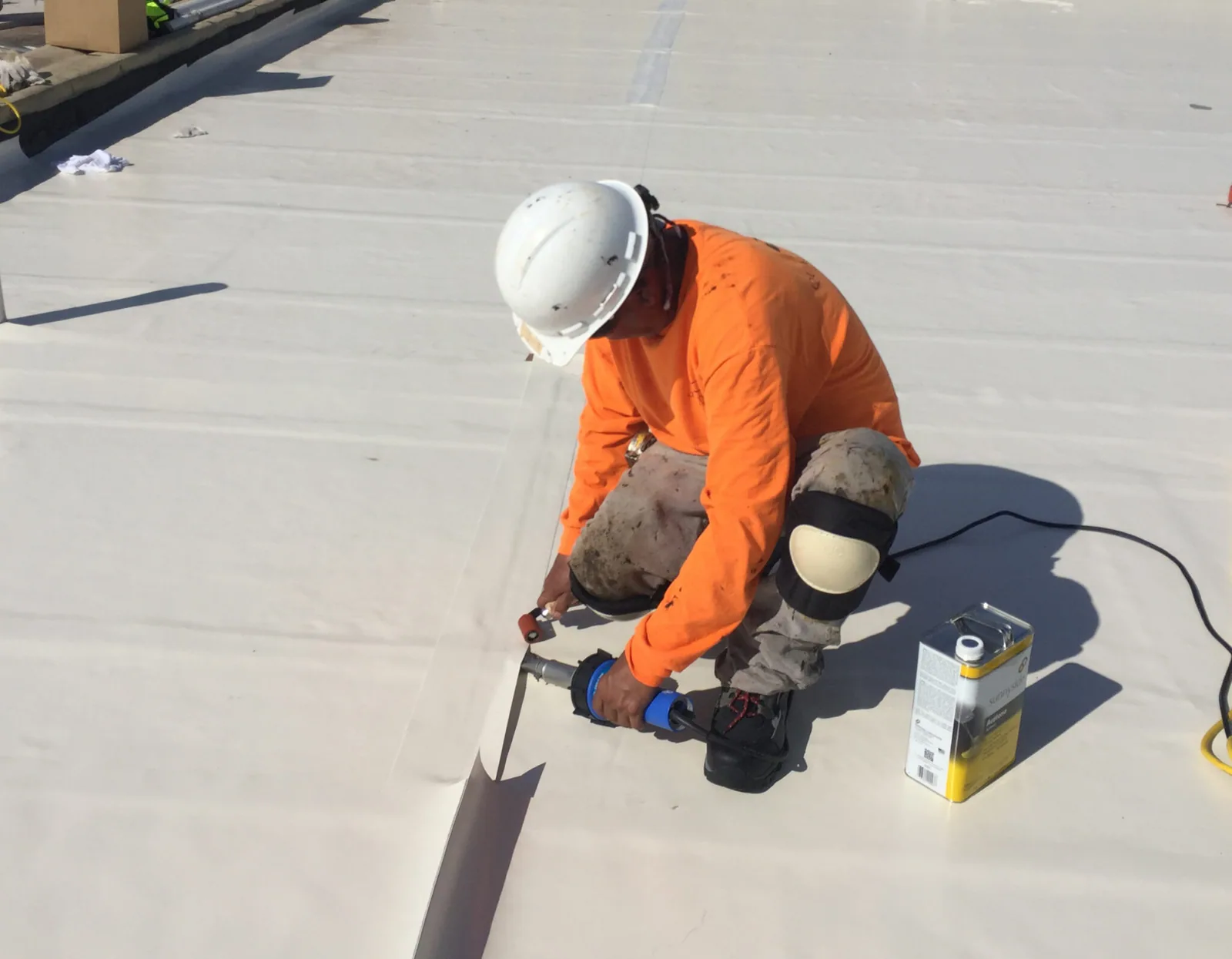
A weld repair may work when the surface can be cleaned and prepared and the sheet remains compatible. We inspect the seam, test the preparation if needed and define the patch over sound material. If the surface has degraded or remains contaminated, we present a different approved detail or replacement quantity.
What information helps confirm the installed KEE product?
Submittals, closeout records, warranty documents, original invoices and labeled material samples can help identify the membrane. We compare those records with field construction and note where identification is uncertain. The repair method follows the product requirements confirmed for that roof.
Can an existing KEE roof be recovered?
Recover eligibility depends on moisture, attachment, deck, added height and the specific system requirements. We map test results, review perimeter and drain transitions, and identify any code questions. Sections that fail those checks remain outside the recover quantity and are priced separately if removal is required.
How often should the exhaust area be inspected?
Inspection timing should reflect equipment service, visible residue, leak history and the roof maintenance plan. We check the membrane and flashing after work that disturbs the curb or roof path, then record new conditions by section. The owner can use those notes to set a follow-up interval without treating a generic schedule as a substitute for the roof record.
Request a Roof Assessment
Provide the Aurora address, facility contact, KEE submittals, exhaust information and repair records. We will inspect the membrane and details, document compatibility questions and return section-level repair or replacement quantities.
Call 555-555-5555 or send the form and we will set a time to walk the roof.