Commercial PVC Roofing in Aurora, IL
Roof Systems
Check the PVC system against the roof exposure
Grease residue near a kitchen exhaust can change which single-ply membrane is appropriate, but it does not identify the roof's remaining condition. We inspect the PVC sheet, welded seams, exhaust discharge, flashing and nearby insulation before proposing a repair or replacement. Aurora's summer heat puts exposed membranes through warm roof-surface conditions, and annual precipitation averages about 37.7 inches. The recommendation records both the material exposure and the tested area so product selection does not outrun the evidence.
The Fox Valley Mall subarea covers the mall and adjacent commercial properties, and Eola Road connects east Aurora to the Route 59 retail district. Each building still needs field confirmation of its discharge and roof assembly. We identify whether the system is PVC, note its thickness and attachment where documented, and map repairs by section. A roof inspection sets the condition band before a facility director compares PVC repair, coating or replacement.
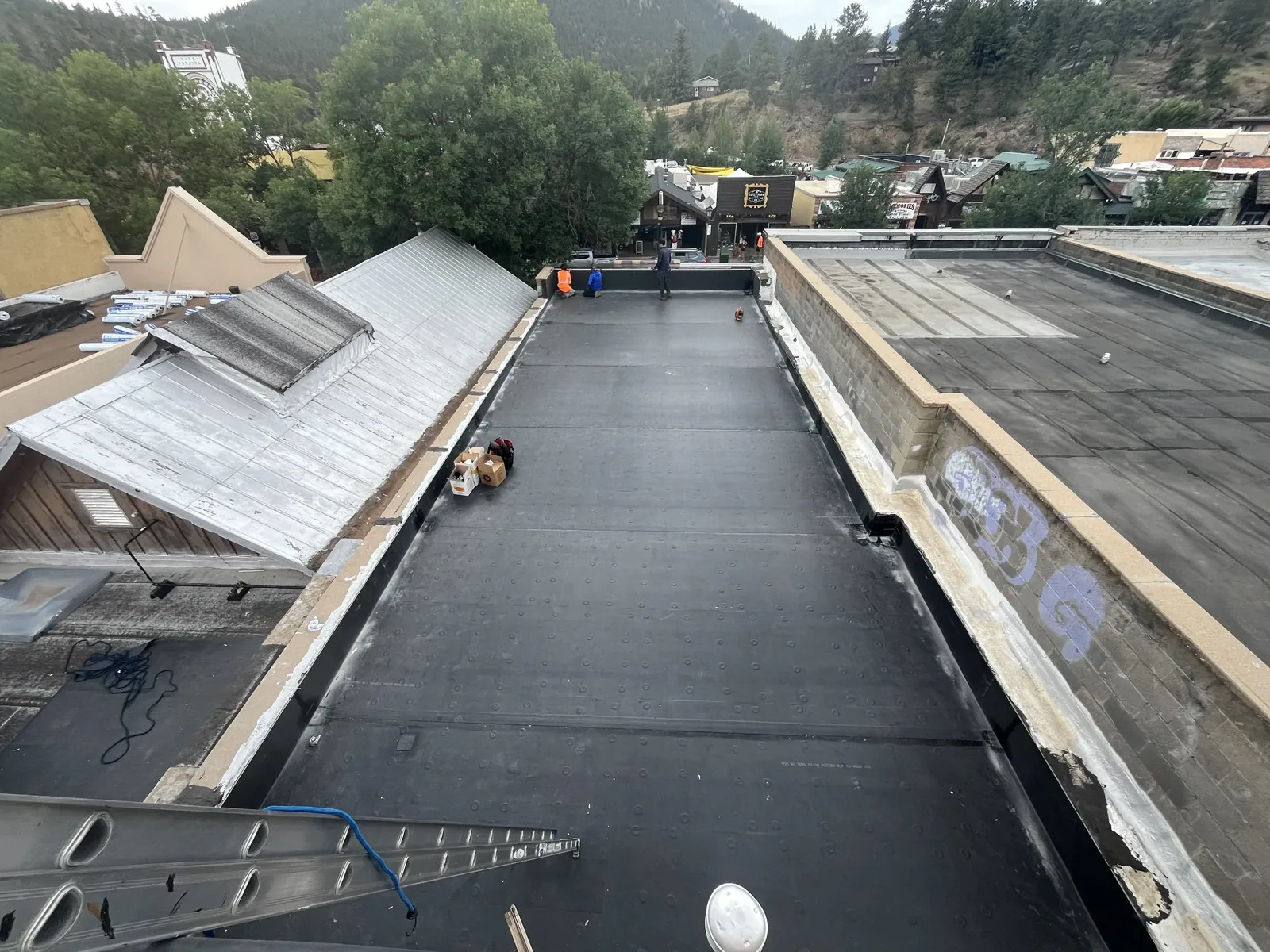
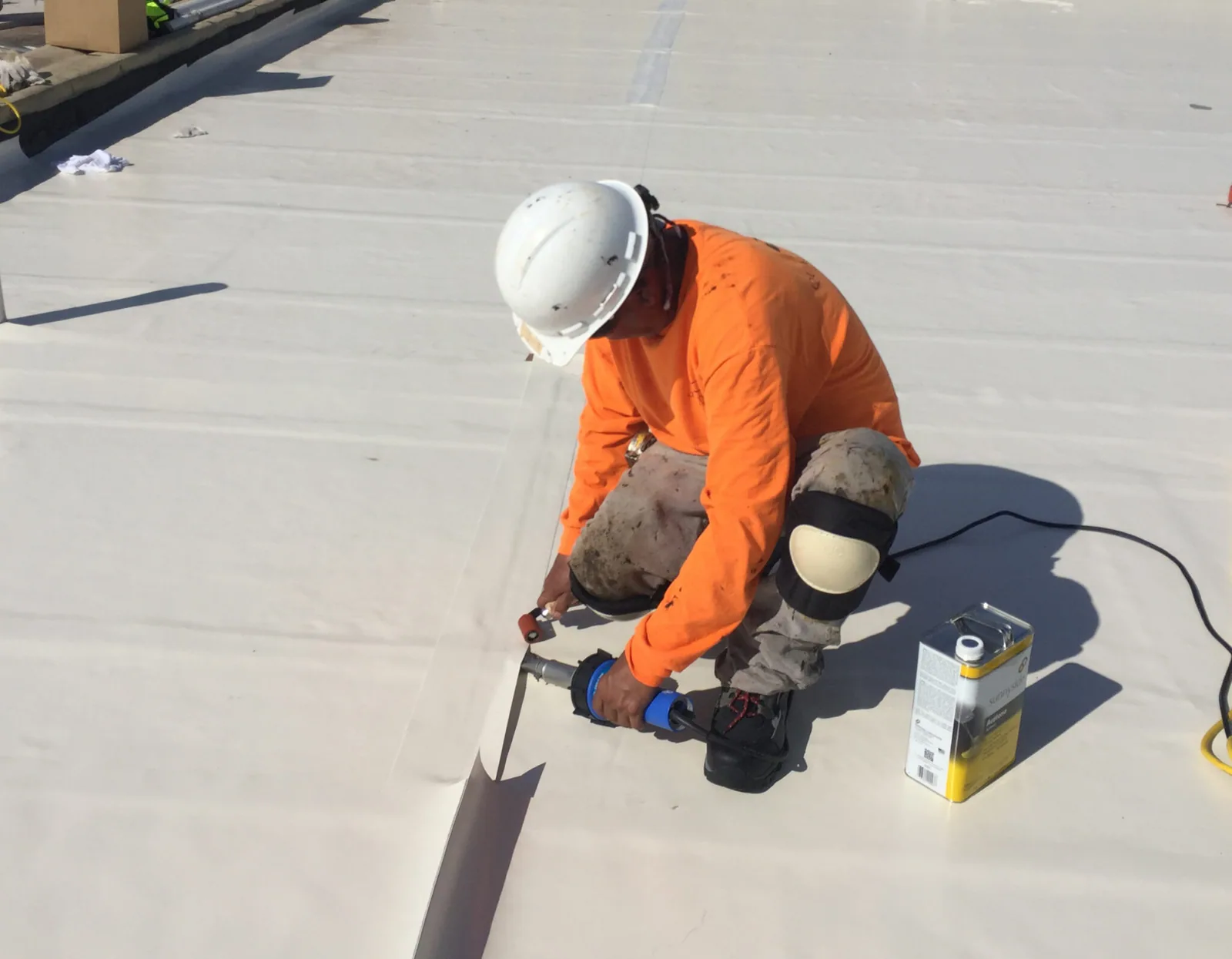
How has the PVC surface changed?
PVC membrane seams are fused with heat, joining the thermoplastic single-ply sheets into one field. We inspect welds, flashing transitions, penetrations and areas near exhaust discharge for discoloration, softening, surface change or separation. Product formulation and exposure affect how a particular sheet responds; visual color alone does not establish compatibility. We check suspect areas against the installed system records and manufacturer requirements. If the membrane is coated, contaminated or repaired with an unknown material, we record that limitation and test an inconspicuous area before planning a weld.
At corners and perimeters, attachment and edge details can govern the repair more than field-sheet condition. We check termination bars, coping interfaces, metal edges and fastener movement, then inspect whether the membrane remains connected to the underlying assembly. Aurora's freeze-thaw exposure can stress an opening where water reaches a seam or curb. We document the adjacent drainage path and test suspected wet insulation before sealing over it. Each section receives a measured boundary and a photo reference for the work file.
When does PVC suit the building's exposure?
PVC may be considered where the specified formulation and manufacturer guidance fit the building's use, including roof areas exposed to grease or certain chemicals. Suitability depends on the actual discharge, product data, seam design and maintenance conditions. We do not treat all kitchen exhaust as the same exposure. The facility provides equipment type and operating information, and we inspect residue and airflow paths. That record lets the owner compare PVC with TPO or KEE/PVC alloy or EPDM based on verified conditions.
Seam repair depends on membrane cleanliness and weldability. Where the existing sheet can be prepared and welded, a localized patch may restore a defined opening. If contamination, deterioration or repeated failures extend across a section, a broader replacement may be more supportable. We map test welds, approved repair lengths and any areas that cannot be validated. Coating should be considered only when the existing roof and selected system meet compatibility and adhesion requirements.
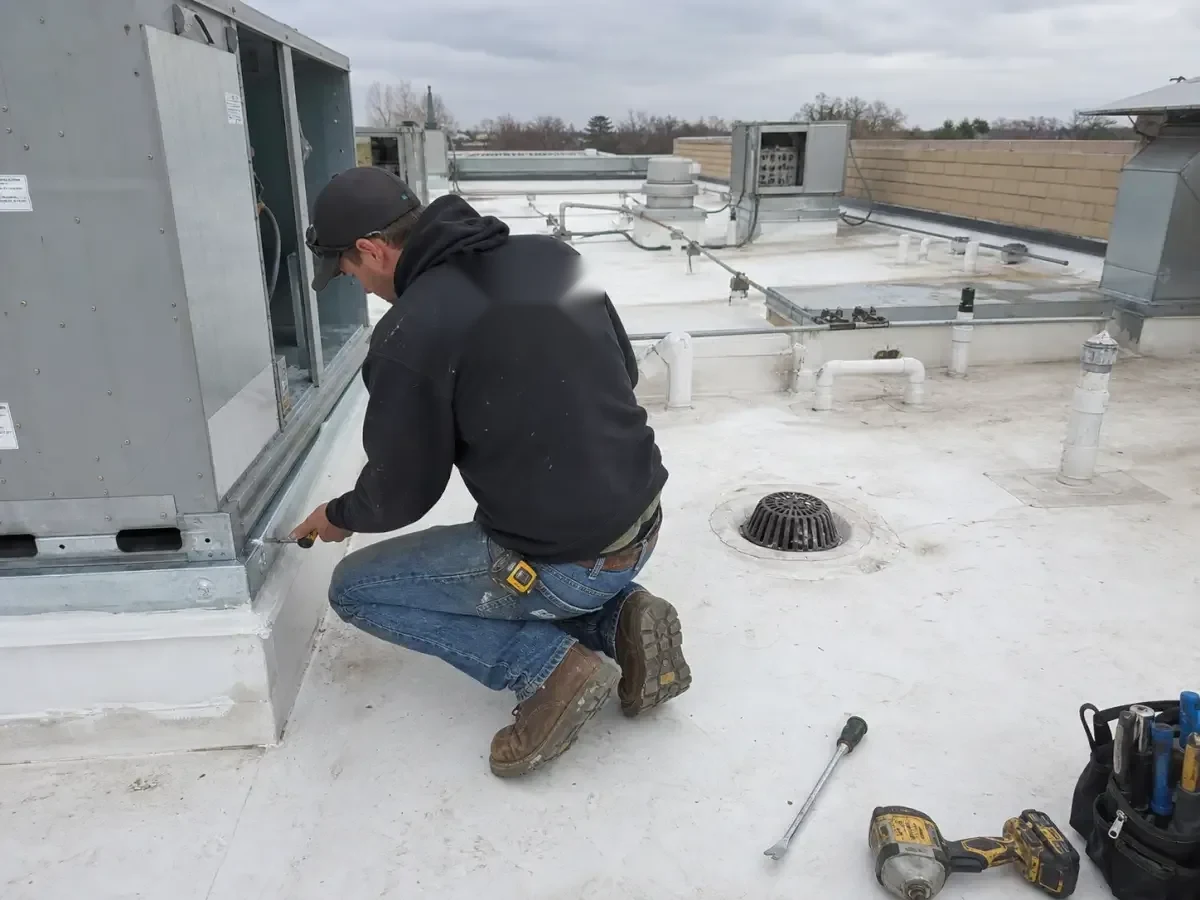
What details need particular attention?
Kitchen exhaust curbs, grease ducts, plumbing vents, equipment supports and wall transitions each need a flashing detail matched to their geometry. We inspect curb height, corners, boots, welds and nearby service paths. If a technician has moved equipment or left a tool on the roof, we document the surface condition and trace any puncture. A curb and support review can coordinate roofing work with mechanical service and identify who must move or shut down equipment.
Drains and scuppers can hold grease, debris or water against a seam. We inspect the outlet, surrounding membrane and flow path, then list cleaning and repair separately. Aurora receives wetter monthly precipitation totals from May through September, so an open drain or failed flashing can become time-sensitive during the warm season. A drainage check helps distinguish an outlet obstruction from a low roof section. The scope records any area blocked by equipment or unsafe access.
What changes a PVC project quantity?
Quantity and cost follow sheet area, seam length, surface preparation, attachment, insulation, curbs, exhaust details, edge metal and access. A section replacement may require removing wet insulation and rebuilding termination heights; a localized weld repair may require only a defined patch and detail. We list each item separately and identify tested and untested areas. If opening the roof could reveal a concealed condition, the proposal states the allowance and the process for measuring added work.
PVC assembly and insulation changes should be reviewed under Aurora's current building code and the Illinois commercial energy rules that apply to the project. The design and permit team confirms how requirements apply to this project's assembly and insulation scope. We flag that review before ordering PVC thickness, attachment or cover board. For active retail or food service, an occupied-building sequence can show staging, service access and how exhaust operations remain coordinated during work.
Which system details should stay on file?
The closeout record should include PVC product data, thickness, attachment, seam plan, repair locations, test weld results and photos of curbs and terminations. We record material changes and the roof sections where work was completed. If the owner has warranty documents, they should remain with the installation and repair history. Future inspectors need to know what material was welded and whether an unfamiliar patch or coating affects the next repair method.
For facilities on Fox Valley retail corridors or the Eola Road commercial corridor, separate roof plans and service logs keep each building's exposure and repair history distinct. The next maintenance visit should check exhaust areas, seams, drains and service paths. A roof asset record can retain inspection dates and repair quantities.
Is PVC a good choice below restaurant exhaust?
It may be suitable when the specified product and manufacturer guidance support the actual discharge and operating conditions. We inspect residue, airflow, membrane data and maintenance practices before recommending a system. The design should identify exhaust clearances and any required flashing or protection; a generic statement that PVC resists chemicals does not replace that review.
Can a damaged PVC seam be heat welded?
Welding is possible when the sheet can be cleaned and prepared and the material remains compatible. We inspect the seam, perform a test weld when needed and map the repair onto sound membrane. If contamination or deterioration prevents a reliable weld, we identify another approved repair or a larger section replacement.
How is PVC different from TPO?
Both are thermoplastic single-ply membranes with heat-welded seams, but their formulations and product requirements differ. We compare the installed system, exposure, attachment, warranty documents and maintenance conditions. The building's actual use and detail constraints guide selection rather than a general preference for one membrane.
What if grease has reached the roof membrane?
We document the discharge path, residue, surface condition and affected area, then consult the product requirements for cleaning and repair. If the sheet has changed or the seam cannot be validated, the scope may need testing or replacement of that section. The report distinguishes observed residue from confirmed membrane damage.
Can PVC be installed over the current roof?
A recover requires acceptable moisture, attachment, deck and added-height conditions, plus project-specific code review. We map tested areas and inspect drains, curbs and edges before choosing that route. Sections that do not qualify are shown separately, so an overlay quantity does not include unsupported areas.
Request a Roof Assessment
Provide the Aurora address, facility contact, PVC product records, exhaust details and repair history. We will inspect seams, test suspect areas and document a measured option for repair, recover or replacement.
Call 555-555-5555 or send the form and we will set a time to walk the roof.