Commercial Roof Replacement in Aurora, IL
Commercial Roofing Services
Set the replacement scope against the roof record
Wet insulation across several roof sections changes a replacement decision more than a single open seam. We map the affected areas, check the attachment and drainage, and separate confirmed loss from membrane that remains serviceable. Aurora records about 37.7 inches of annual precipitation, with wetter months from May through September. That cycle makes a replacement scope depend on how water leaves each section, not just the visible surface. A hands-on commercial roof inspection establishes the repair threshold and the approved quantity before capital is assigned.
For a facility near Fox Valley Mall or the I-88 corridor, work access and occupant schedules can influence sequencing. Roof cores, drawings and field observations identify the assembly on an individual building. We document deck condition, insulation layers, penetrations, edge details and drainage paths, then compare full removal with any viable alternate. The decision record identifies assumptions separately from tested areas, so a facility director can align replacement scope with the next season window.
Which sections support replacement?
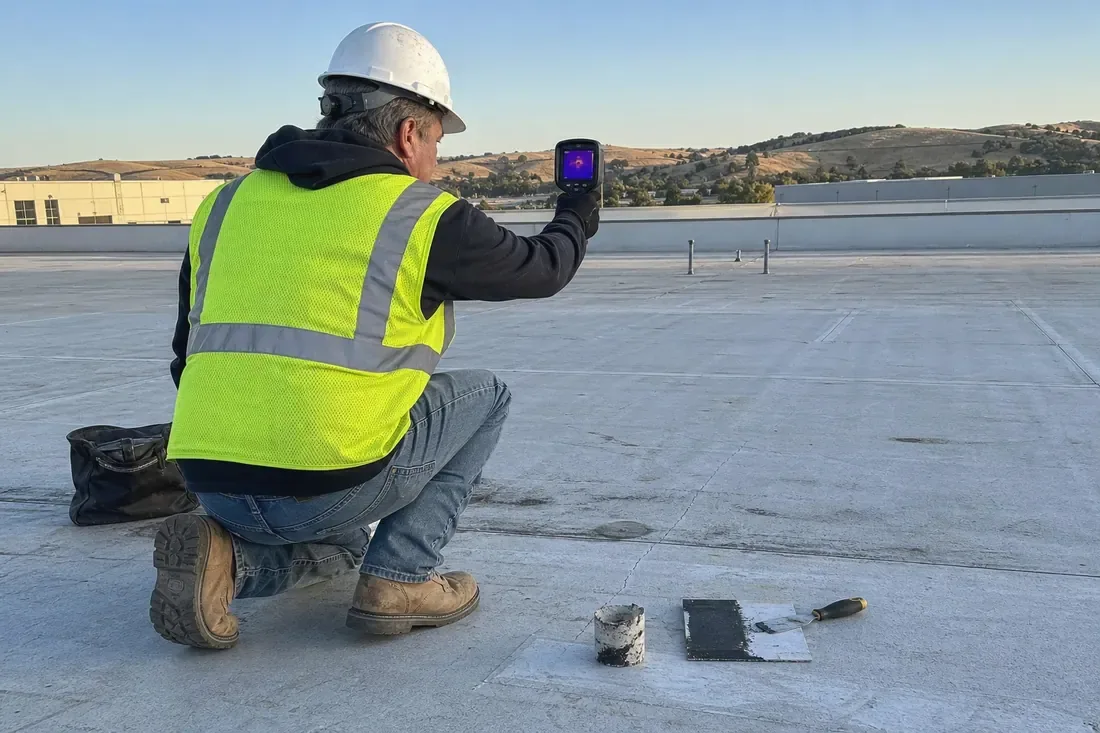
A replacement becomes supportable when the membrane has reached its repair threshold, moisture extends beyond practical isolation, or repeated repairs no longer protect the assembly. We divide the roof into sections and record seam condition, flashing transitions, insulation response and drainage. Infrared readings can help locate suspected wet areas, but they do not establish the quantity by themselves. We confirm suspect zones with core cuts where approved, then mark areas for removal against the roof plan. That distinction protects the budget from treating every thermal variation as wet insulation.
Existing construction affects the new assembly. A tear-off may expose damaged deck, trapped moisture or layers that were not apparent from above. The replacement plan addresses those findings through documented unit quantities and decision points before concealed conditions change the scope. We review the building's use, rooftop equipment and drainage outlets as one working system. For properties along Route 59, where retail sites and regional access meet, delivery and staging constraints belong in the project sequence alongside membrane selection. The report preserves the condition band for each section.
What sets the approved quantity?
Cost and duration follow the area removed, number of insulation layers, deck repairs, perimeter details, curbs and drain work. An assembly with sound insulation and localized edge damage may support a different scope than a roof with widespread wet material. We list each allowance with its basis, including the tested area and any concealed condition that remains uncertain. The approved quantity should distinguish replacement from repair work rather than blending both into one broad roof-area estimate. That makes later changes traceable to a field finding.
Aurora's 2024 building-code series took effect January 1, 2026, and privately funded facilities also follow the Illinois Energy Conservation Code. The applicable requirements depend on project conditions and must be confirmed during design and permitting. We review insulation, attachment and assembly details against the project requirements instead of assuming a like-for-like surface swap. Where energy-code review affects the assembly, we identify the open item before procurement. An insulation and cover-board scope can be coordinated with the replacement plan, while capital planning can carry the documented quantity into the budget cycle.
How does replacement fit operations?
Occupied buildings need a sequence that limits open roof exposure and gives the facility contact clear handoffs. We divide work into manageable sections, confirm weather protection at each shift boundary, and coordinate noisy or access-sensitive work with operations. Summer heat, hail season and winter cold create different constraints in Aurora. A roof opened during a wet forecast needs a secure dry-in plan; cold conditions can affect material handling and installation requirements. We set the sequence around verified conditions and manufacturer instructions for the selected assembly.
Hospitals, schools and industrial operations need different communication windows. Rush Copley Medical Center is a major Fox Valley healthcare institution, and Aurora's two public school districts are among the city's large employers. The facility contact identifies critical entrances, sensitive equipment and areas that must stay available during phased work. We can compare occupied-building reroofing coordination with an off-hours sequence and record the selected approach for the contractor, owner and building staff.
What should the closeout record show?
Before removal begins, the project file should show the roof plan, section boundaries, approved quantities, material assembly, drainage work and the process for concealed conditions. During construction, daily records should identify completed areas, temporary protection, weather interruptions and any deck or insulation findings requiring owner direction. Photographs tied to roof sections let the facility team compare the field condition with the approved scope. We keep that evidence distinct from untested areas so the final record does not imply more certainty than the inspection supports.
At completion, we review seams, flashings, terminations, penetrations and drainage paths, then prepare a condition record with maintenance items and a portfolio date for the next review. The date matters for Aurora's freeze-thaw exposure: water at a detail can expand as temperatures move below freezing, and spring inspection can identify movement before another wet season. A roof condition report preserves the accepted work and remaining observations. Owners near Downtown Aurora or the Eola Road corridor can keep that record with equipment and capital files for the next review.
When does a repair stop being the better capital choice?
The section evidence sets that threshold. We compare recurring repair locations, membrane condition, tested insulation and any deck concerns, then show the quantity each option addresses. If isolated work can protect sound adjoining areas, we price and document that path. If wet material or failures span multiple sections, replacement may be more supportable. The record keeps assumptions visible so the owner can approve the scope that matches the building's condition.
Can a new roof go over the existing assembly?
A recover is possible only when code, moisture and assembly conditions allow it. We inspect the existing membrane, test suspect insulation, review attachment and confirm whether added layers create acceptable height and edge conditions. A planned roof recover assessment can establish that option before tear-off is chosen. If moisture is widespread or the existing assembly cannot support another layer, removal may be the clearer route.
What happens if crews find wet insulation or damaged deck?
The approved scope should define how concealed findings are recorded and presented for direction. We photograph the exposed area, identify its roof section and measure the affected quantity before proposing a change. That process avoids charging replacement across unverified areas. The owner can compare the added work with the original allowance and keep the final record tied to what was actually found.
How do Aurora's code changes affect the project?
The current code path is confirmed against the work, funding and permit conditions. Aurora's 2024 I-Series building codes took effect January 1, 2026, and the Illinois Energy Conservation Code applies to privately funded commercial facilities. We identify the applicable review with the design and permit team before ordering materials. The roof assembly and insulation scope should reflect those requirements, not an assumed match to the old roof.
What records help set a realistic schedule?
Roof plans, prior repair logs, leak locations, equipment access rules and operating-hour limits give us a useful starting record. We compare those documents with field observations and the forecast-sensitive season window. For a building near Route 59 or the airport industrial area, delivery and staging access may also affect phasing. The schedule notes confirmed constraints, owner decisions and conditions that could change the sequence.
Request a Roof Assessment
Send the Aurora address, facility contact, available roof plans and current repair records. We will inspect the roof sections, document tested areas and prepare an approved quantity for the budget and season window.
Call 555-555-5555 or send the form and we will set a time to walk the roof.