About Commercial Roofing Contractors Aurora
Commercial Roofing in Aurora and the Fox Valley
Commercial Roofing Contractors Aurora works with commercial property owners, facility teams and project managers who need a clear view of roof condition and a practical path forward. The work begins with the building and its evidence: available plans, maintenance history, leak reports, roof access and the requirements of the people using the space. We inspect the assembly, document findings by section and describe the limits of what could be observed or tested.
A roof recommendation should help an owner decide what to do next. That may mean correcting a specific defect, confirming moisture, establishing a maintenance baseline or comparing repair with replacement. Our commercial roof inspection gives a starting record, and a condition report keeps findings, photographs and open questions together.
Work grounded in Aurora and nearby commercial markets
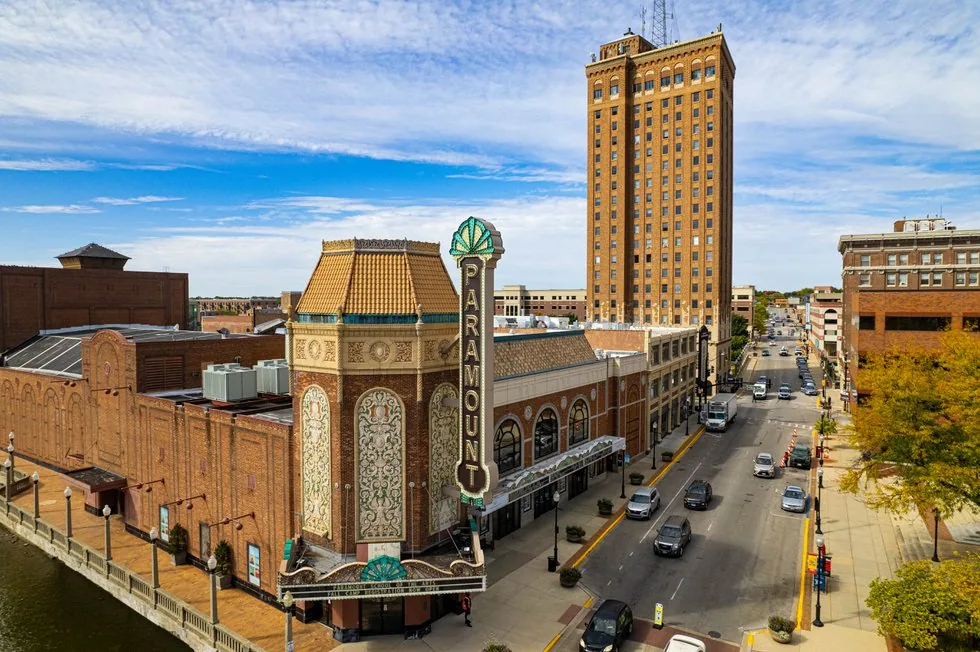
Commercial roofing service is available in Aurora, Illinois, and nearby Fox Valley and DuPage County communities. Commercial properties appear in downtown districts, retail corridors, campuses, business parks and industrial areas. Named locations such as the Fox River, Route 59, I-88 and Route 30 help orient a project, but a district label does not identify the roof at an address. The actual facility, its records and field conditions establish what can be recommended.
Aurora's climate includes cold winter periods, freeze-thaw cycles and warm-season precipitation. These conditions make drainage, seams, perimeter details and transitions worth examining during inspection. The weather context can inform what to look for; it cannot prove that a specific roof has failed or identify the cause of water entry. We keep general market exposure separate from measured damage and test results.
Commercial roof decisions arise at warehouses, schools, offices, retail centers, healthcare facilities and campuses, and for manufacturers, public agencies, logistics operators and property managers. Their operations differ. A loading facility may need truck movement preserved, while an occupied campus may require notice and access planning. The responsible site contact should confirm these needs for each project.
Start with inspection, then match the scope to the evidence
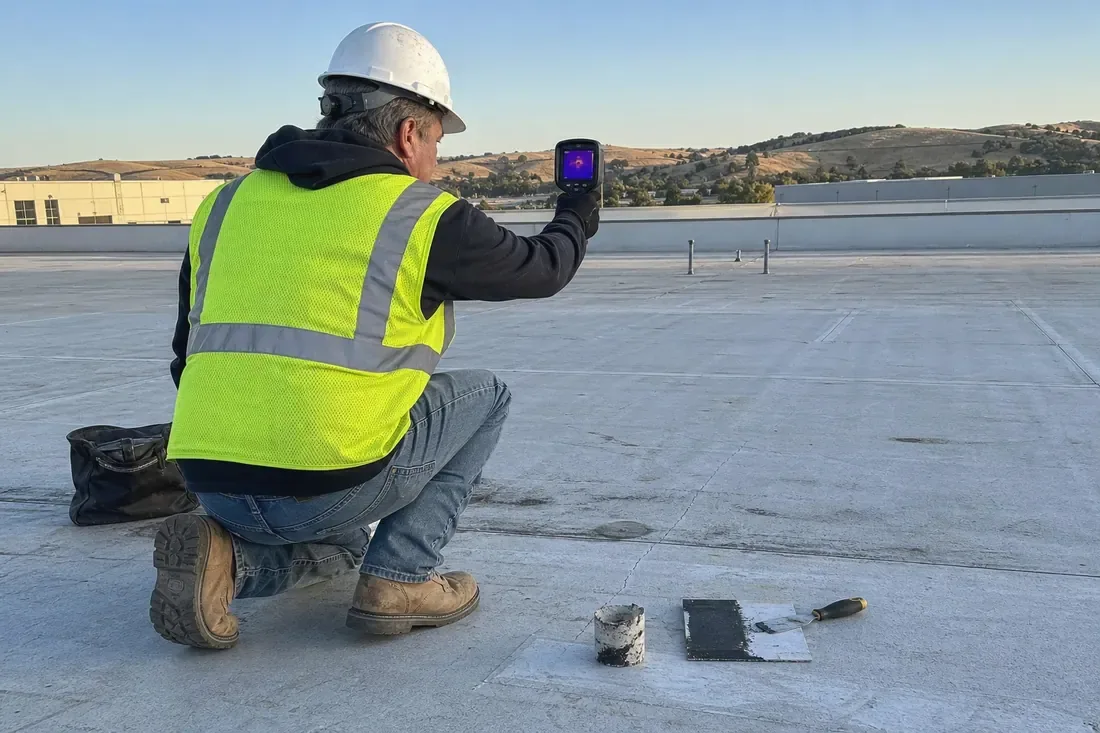
An inspection should identify the roof assembly where records and field details support it. We review seams, drains, flashings, penetrations, rooftop equipment, edges and prior repair areas, then map observations to roof sections. When the visible surface cannot answer a question about concealed moisture, an infrared moisture survey or targeted sampling may help map areas with concealed moisture before quantities are set. The report states the method, coverage and locations that remain inaccessible or untested.
For a localized defect, a repair scope should name the work area, preparation, compatible material, included quantity and conditions that could change the job. If evidence supports more extensive work, a replacement review should describe removal, substrate assumptions, flashing, drainage, tie-ins and project phasing. A recover assessment requires confirmed layers and substrate, and should account for applicable code and system requirements. The option follows the roof findings, not a preference for one construction method.
Make roofing work fit the way the building operates
Property work requires a plan for access, staging, safety, materials, debris, weather protection and communication. Before mobilization, identify occupied areas, delivery routes, restricted zones and a site contact who can make decisions when field conditions differ from the records. On a multi-day project, define the work area and expected closed condition at the end of each shift. These details help owners understand how the project fits building operations and what needs to be resolved before work begins.
For recurring care, preventive roof maintenance can record drains, seams, flashings and follow-up tasks. For owners with several facilities, capital planning can organize recommendations by condition and consequence while keeping each property's findings distinct. Budgets should separate measured quantities from allowances and identify what testing or access is needed before final scope.
Serve the building and its operating needs
Commercial properties across the market include warehouses, distribution facilities, schools, offices, retail buildings, medical facilities, campuses and mixed-use properties. Ownership may sit with an operator, property manager, public agency, investor or project team. Each group needs a roof record that answers its own decision: what needs immediate attention, what can be maintained, what requires more testing and what belongs in a future capital budget. We adapt inspection scope and communication to that decision without assuming a property type tells us the roof condition.
For example, a distribution facility may need access coordinated around loading, while a school may require work windows that protect occupied spaces. A retail or medical property can have restrictions on customer, patient or tenant routes. The responsible contact confirms those requirements. We then state staging, protection and schedule assumptions in the scope so the owner can assess the effect on operations.
Keep the record useful after the immediate project
Closeout should preserve the roof plan, completed work, product information, approved quantities, photographs and any inspection or test results. Identify the repair area and note locations that remain untested. If an issued warranty applies, retain its exact language and issuer information. Record later trade work that changes a penetration, curb, support or drain. When facilities staff or ownership changes, these documents let the next person understand the condition and prior decisions without relying on memory.
We also identify what the inspection did not establish. A visual review cannot confirm every concealed layer, and a test has limits based on method and coverage. If findings support only a localized action, the recommendation should stay within that evidence. If broader work is being considered, describe what additional access, testing or design information would improve the scope. This helps keep expectations aligned with what has actually been inspected.
A clear path from question to approved scope
Owners can begin by sharing the property address, available roof documents, prior repair notes and the reported concern. We review the information, clarify access and identify whether the first step is a condition inspection, moisture assessment, repair or capital review. After the site visit, findings and options can be discussed with the people responsible for operations and funding. The project record identifies the specified product and any issued warranty terms, with the issuer identified.
Aurora, downtown, the Fox River area, the Route 59 corridor and I-88 are useful market references, but every scope must identify the building and roof section. The goal is a decision record the owner can use: observed conditions, tested areas, options, quantities, constraints and open questions. That foundation supports better maintenance today and more informed planning for later roof work.
Keep decisions and approvals visible
Before work begins, identify who receives inspection findings, who can approve a change and how urgent conditions will be reported. A proposal should distinguish the base scope from optional items, allowances and work that requires further testing. If an assembly differs from the records after opening, document the finding and pause at the agreed decision point before proceeding. This protects a shared understanding of what was priced and what changed in the field.
During completion, provide photographs and notes tied to the roof plan, then list any deferred items or locations that could not be assessed. Clear communication is particularly useful when property management, ownership and building operations are handled by different people. Each can see the same facts, understand the remaining questions and make the next decision without treating an estimate as proof of hidden conditions.
Commercial Roofing Questions
What should I bring to a first roof review?
Provide the address, available roof plans, repair invoices, leak reports and the contact who can arrange access. Those records help set the inspection route; the field visit confirms the assembly and current condition.
What does a roof condition report include?
It can include the identified assembly, inspected areas, photographs, measured repairs, test results, access limits and recommendations. The report distinguishes confirmed findings from questions that need more evidence.
Can you recommend work before inspecting the roof?
We can discuss the reported concern and identify records or access needed for a visit. Repair quantities and system recommendations follow the building conditions we can inspect or test.
Who should join the site review?
Include the person who can arrange roof entry and someone familiar with operations below the work area. For a larger project, the owner or project lead can help identify the decision and schedule the findings need to support.
Start with the property and the decision ahead
Share the building address, roof records, reported conditions and operating requirements. We can identify a suitable inspection or planning step.