Commercial Roof Maintenance in Aurora, IL
Commercial Roofing Services
Put the roof on a documented maintenance cycle
A drain that holds water after a routine rain changes the maintenance record even when the membrane has no open seam. We trace the drainage path, check nearby laps and penetrations, and note whether the standing water reflects a blocked outlet, a settled area or a design condition. Aurora averages about 37.7 inches of precipitation a year, with wetter months from May through September. A scheduled commercial roof inspection turns those observations into a repair threshold and an approved quantity for the next work window.
For a portfolio with buildings near Fox Valley Mall and along I-88, a common calendar helps compare condition without treating every roof as the same assembly. Each visit identifies the building, roof section, access point and date. We distinguish surface debris from membrane damage, and visible conditions from areas that need testing. The visit record gives the facility director a basis for setting the next action and work window.
What belongs on the recurring roof walk?
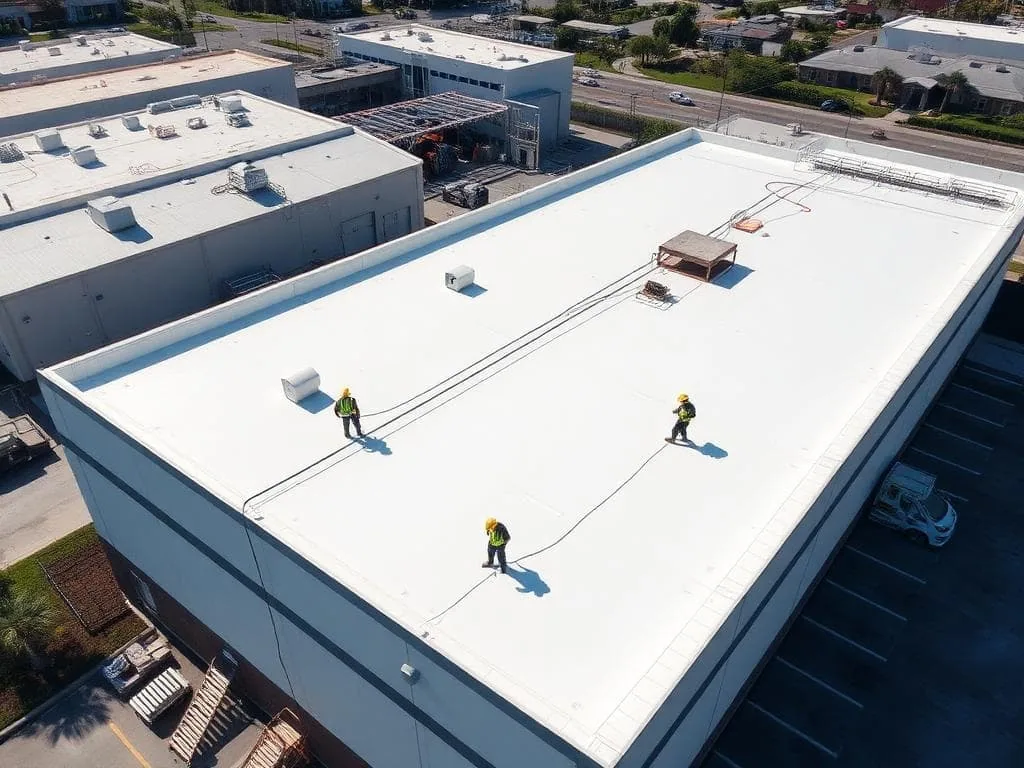
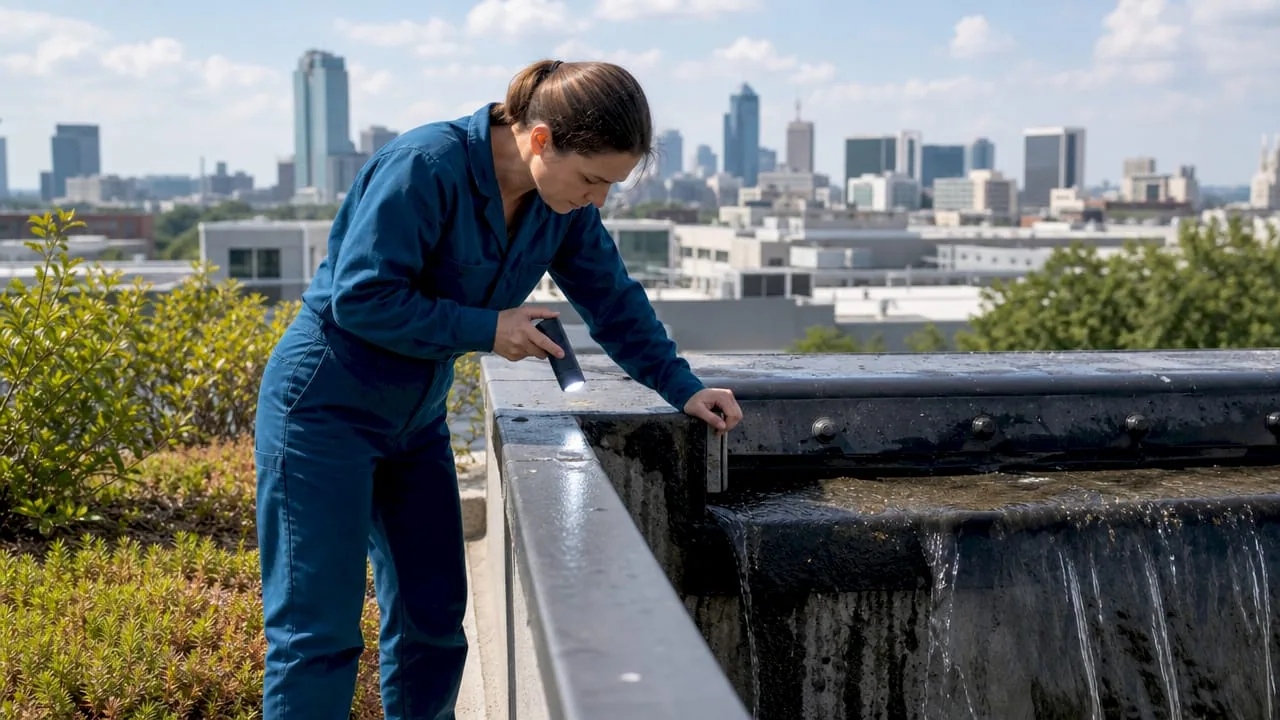
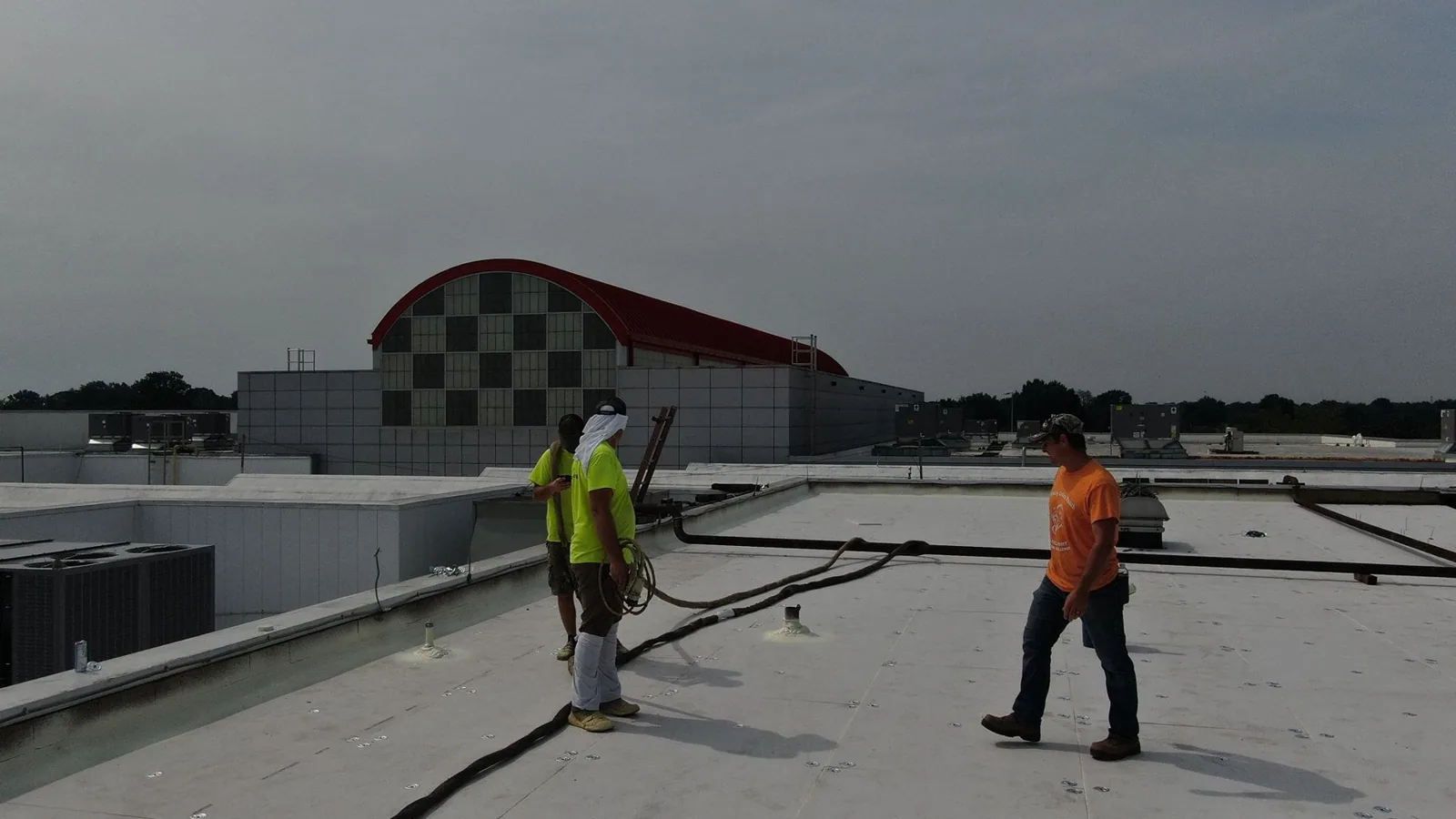
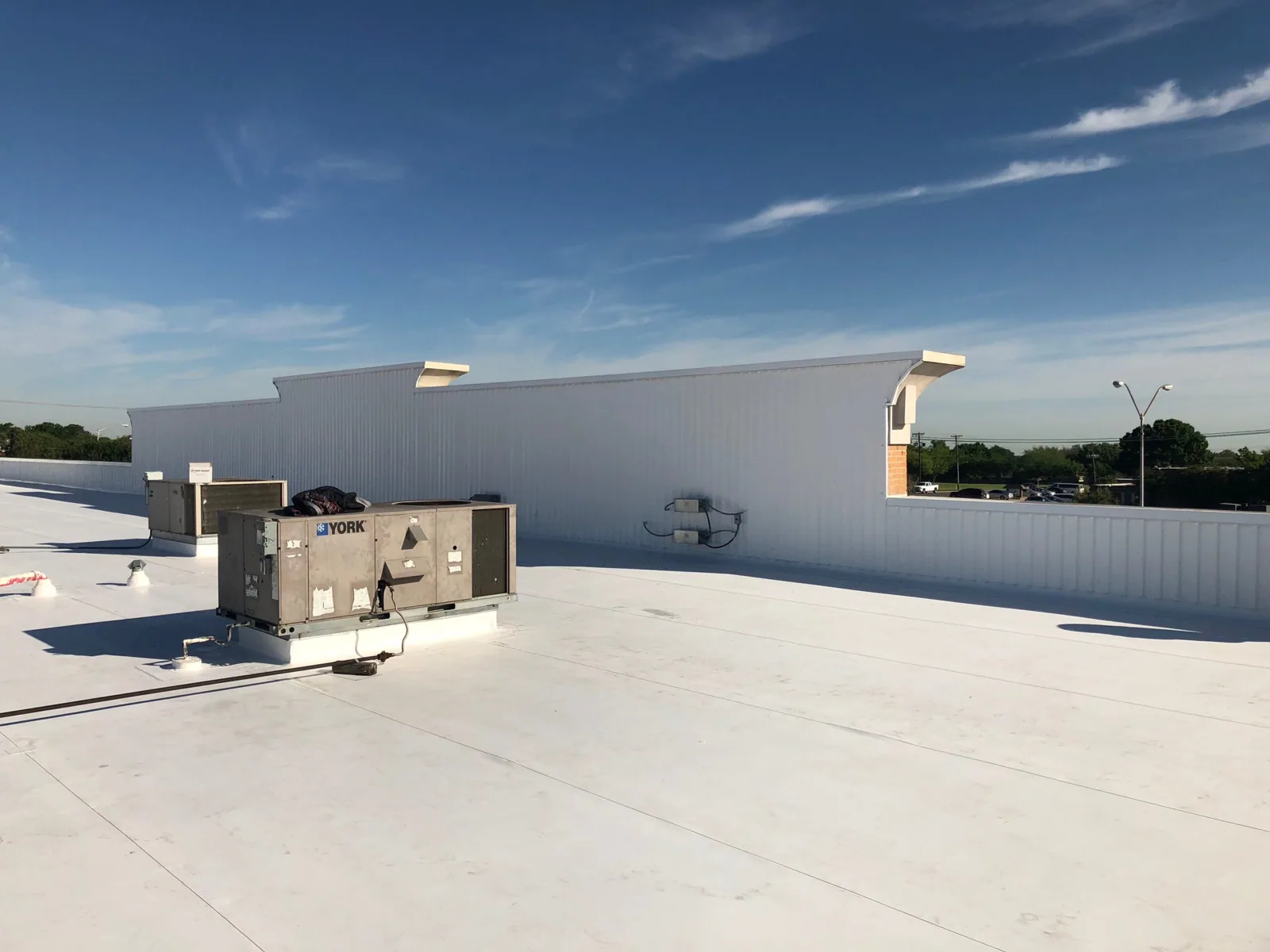
The walk begins with drains, scuppers, gutters and downspouts because blocked outlets can keep water against seams and flashing. We clear debris where the maintenance scope permits, photograph the outlet and confirm that water has a path away from the roof. Around rooftop units, we check curb flashing, support pads and service clearances for damage introduced by equipment work. At parapets and edges, we look for loose metal, open laps and sealant failure. Each observation is mapped to a roof section so a later visit can establish whether it changed.
Membrane seams, patches and penetrations need their own condition notes. A patch that remains bonded is not equivalent to a blister, split or puncture nearby. We record the size and location of a defect, check adjacent material and identify whether a repair can be isolated. If soft insulation or recurring interior moisture suggests a concealed issue, we mark the area for testing instead of counting it as confirmed damage. This approach gives maintenance staff a useful action list while protecting the capital record from unsupported quantities.
How should visits fit Aurora's seasons?
Aurora averages about 121 days below freezing each year, including several days below zero. Repeated freeze-thaw can widen a small opening where water enters a seam, curb or drain detail. A fall visit can remove loose debris and record exposed details before cold weather, while a spring visit can check movement, ice-related damage and drainage after temperatures shift. Hail and tornado risk also makes a post-event review useful when a site is in an affected area. A hail damage assessment records impact evidence without assuming every mark compromised the membrane.
Visits should follow actual roof conditions and the facility's operating calendar. A roof with active leaks or a known open detail may need a near-term correction; a stable area can remain on its routine interval. We note the season window, recent weather information supplied by the owner and any access restrictions that affect timing. Along the Eola Road or Farnsworth Avenue corridors, nearby traffic and tenant hours may affect delivery or lift scheduling, but the roof record sets the maintenance priority.
Which findings require repair now?
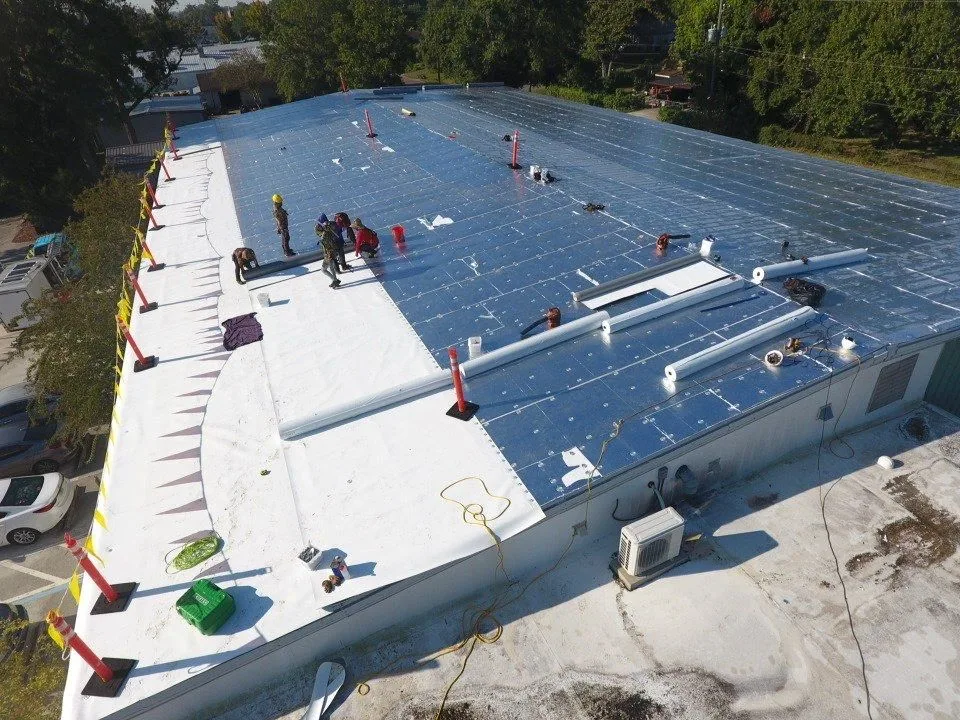
A maintenance recommendation separates conditions by consequence. An open seam or displaced flashing that admits water belongs in a repair scope; a surface mark without a confirmed breach belongs in the inspection record until testing says more. We assign condition bands to sections and identify the evidence behind each one. When two adjacent areas show different symptoms, they stay separate in the work order. That helps the facility director approve only confirmed quantities and see where a follow-up test could change the recommendation.
Drainage concerns can require more than another cleaning. If water remains after outlets are clear, we review slope, crickets, drain height and the surrounding membrane, then document whether correction is feasible within maintenance. A drainage correction scope may address a defined low area, while broader wet insulation could shift the decision toward replacement. We compare those choices against the tested area and the building's roof history. A larger capital scope requires a written basis and owner approval.
What should the maintenance log preserve?
Each entry should include the inspection date, weather context, roof section, photograph references, observations, work completed and unresolved items. If the crew clears an outlet or reseals a defined detail, the record should say where and how much work was authorized. If access prevented inspection of a section, that gap belongs in the report. Prior conditions and current observations should remain distinguishable, so a manager does not read an old stain or repair as a new failure. A roof condition report keeps this history usable at the next portfolio date.
For healthcare operations around Rush Copley Medical Center or education buildings maintained by Aurora's public school districts, downtime and roof access may call for different visit sequences. The citywide presence of those institutions does not establish the needs of a particular facility; the site contact supplies operating hours, sensitive areas and escalation contacts. We include those requirements in the work plan, then record whether the visit met them. That leaves facilities, finance and maintenance with one account of the condition and the decision that followed.
How can maintenance support the budget?
Program cost follows roof area, number of sections, access, frequency, repair quantities and the amount of documentation needed across the portfolio. We separate routine inspection from approved repair work, and list testing as a distinct item when concealed moisture is uncertain. That lets the owner compare planned spending with emergency response and larger replacement allowances. A capital plan can use the condition bands and dates to sequence work by risk and season window rather than by a single undifferentiated roof rating.
The log should show recurring locations, completed patches and open tests as a roof nears its repair threshold. We compare routine work with coating restoration or recover only when the assembly supports those options. Aurora's 2024 I-Series took effect January 1, 2026; privately funded work must also meet Illinois energy code.
What should we do when water remains after a drain is cleared?
The next step is to check whether the outlet was the only obstruction. We review the surrounding slope, drain bowl, scupper and membrane, then map the remaining water area after the roof has had time to drain. If the low point reflects settlement or a blocked path, we document the correction separately from routine cleaning. The record shows whether a repair, added testing or continued observation is supported.
How do you distinguish a maintenance item from a replacement concern?
A condition band follows evidence across each section. We compare seam and flashing condition, patch history, tested insulation and drainage, then identify whether a defect can be isolated. Repeated failures or widespread wet material may cross the repair threshold, but a single surface observation does not establish that quantity. The report shows the tested area and the open questions behind each option.
Can maintenance visits be scheduled around tenant or production hours?
The facility contact sets access windows, roof-entry rules and any sensitive operating periods before we schedule. We can sequence sections or noisy tasks to fit those constraints and document areas that must remain clear. Retail near Fox Valley Mall and industrial properties by the airport may have different delivery patterns, so each address needs its own plan. We retain the confirmed schedule with the visit record.
When is infrared testing useful during a maintenance program?
Infrared can help identify temperature patterns that may indicate concealed moisture under suitable conditions. It is a screening tool, not a final wet-insulation quantity. We compare the readings with roof construction, visual signs and approved core tests, then map confirmed and unconfirmed areas separately. The result can guide a repair allowance or a follow-up inspection without overstating what the survey proved.
What records should we provide before the first visit?
Roof plans, past repair invoices, leak logs, warranty documents and access instructions help us identify roof sections and known constraints. If the facility has a preferred contact for roof access, include that person and the hours they can respond. We compare those records with field observations and note gaps instead of treating an old drawing as proof of current conditions. That makes the first report more useful for the next budget review.
Request a Roof Assessment
Send the Aurora address, facility contact, roof plans and recent repair records. We will map the roof sections, record drainage and seam conditions, and return approved maintenance quantities tied to the next season window.
Call 555-555-5555 or send the form and we will set a time to walk the roof.