Commercial Storm Damage Roof Repair in Aurora, IL
Commercial Roofing Services
Document the roof before approving the repair quantity
A displaced coping joint after a storm can expose the roof edge before water appears indoors. We secure immediate openings, photograph the affected detail and trace the condition into adjacent membrane and insulation. Northern Illinois records include damaging hail and tornadoes, with statewide tornado frequency highest from April through June. Those hazards make prompt documentation useful, but a regional event does not establish damage at a particular facility. We inspect the Aurora roof itself and assign each confirmed item to a section and quantity.
For properties near Aurora's airport industrial area or the Route 59 district, access, loading activity and occupant schedules can shape the first work window. We identify safe roof access with the facility contact, then separate temporary protection from permanent repair. Photos, weather information supplied by the owner and repair notes stay tied to the roof plan. A commercial roof inspection establishes what the event changed and whether a larger assembly review is needed.
Aurora Municipal Airport Industrial Area
Route 59 and 75th Street Corridor
Commercial Roof Inspection
Infrared Roof Moisture Survey
Commercial Roof Leak Repair
Commercial Hail Damage Roof Repair
Property Management Companies
Commercial Roof Insurance Claim Assistance
Commercial Roof Condition Reports
What evidence shows storm impact?
Hail review looks for impact marks, displaced granules or coating, damaged metal, fractured flashings and punctures that reach the membrane. We distinguish cosmetic marks from breaches by examining the material and checking for a water path. On metal, dents alone do not prove a seam or fastener failure. On single-ply systems, surface scuffs need context from seam condition, attachment and adjacent details. We map each observation, photograph representative examples and note areas blocked by equipment or unsafe conditions.
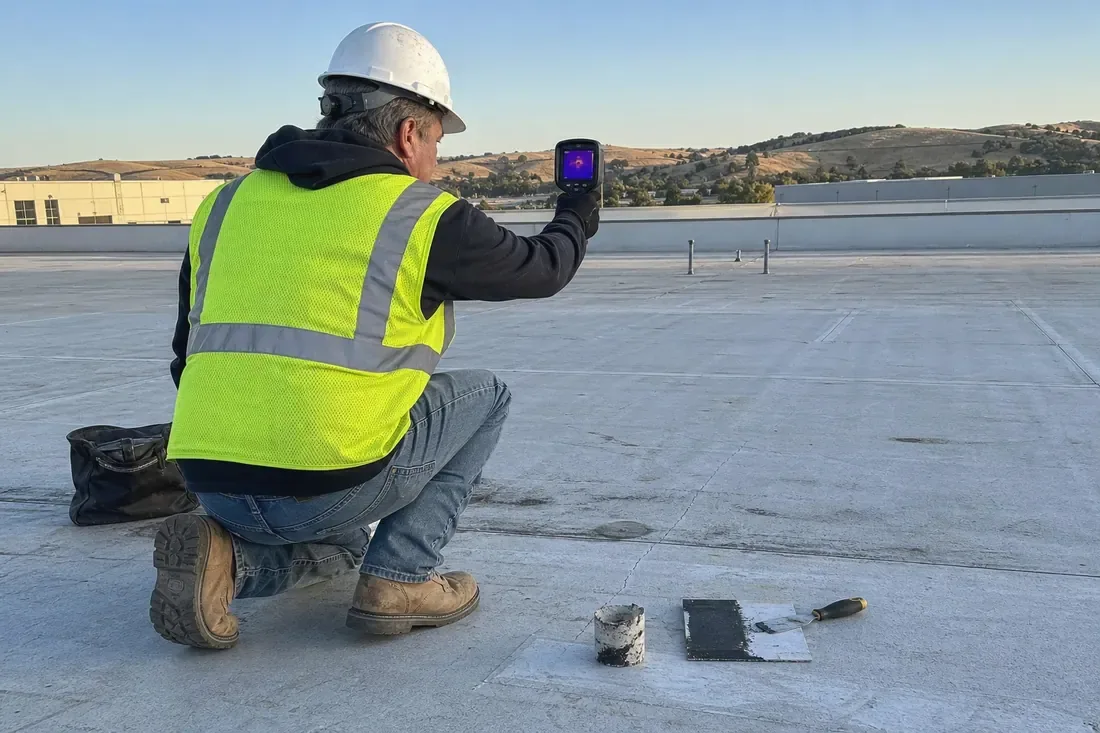
Wind review starts at perimeter details, corners, edges and transitions, where uplift forces can expose attachment issues. We inspect membrane laps, edge metal, coping, rooftop equipment curbs and any displaced debris that could have struck the surface. If an area feels soft or shows interior moisture, we identify it for testing; visual review alone does not define concealed insulation loss. An infrared moisture survey may help map suspect zones when conditions support it, followed by confirmation where required. Tested area and untested assumptions remain distinct.
What needs immediate protection?
Active water entry calls for controlled temporary protection that keeps operations safe while limiting added damage. We locate the opening, cover or isolate it with a method appropriate to the roof, and record the work performed. The facility team should identify sensitive rooms, electrical equipment, inventory and occupied areas below the affected section. We coordinate access and communicate when temporary protection needs a return visit. Emergency response is available around the clock, including weekends and holidays, with permanent repair scoped after conditions are safe to assess.
Temporary measures are not the final repair quantity. Once weather and access allow, we remove or inspect the protection, trace the water path and assess the membrane, flashing, insulation and deck in the affected area. A leak investigation can distinguish storm entry from a pre-existing condition or a different drainage failure. If testing indicates moisture beyond the damaged detail, we expand the mapped area and present a separate recommendation rather than silently broadening the emergency work.
Does the roof need repair or replacement?
A localized puncture, loose flashing or small seam opening may support a repair when the surrounding assembly is sound and the repair material is compatible. Wider membrane displacement, repeated failures or confirmed wet insulation may require a larger section scope. We compare the damage map, previous repairs, moisture tests and roof age records provided by the owner. The condition band shows which portions remain serviceable and where evidence crosses a repair threshold. A hail-specific assessment or wind damage review can document event-related conditions by type.
Aurora's average precipitation is about 37.7 inches annually, with higher monthly totals during May through September. Rain after an opening can expand the interior impact even when the original breach is small. We identify drainage conditions and check nearby seams before setting the final repair boundary. If the roof cannot support an isolated fix, we compare section replacement, recover and full replacement on their measured quantities. The report names the test results, assumptions and cost drivers that shape each path.
How should repair fit site operations?
Repair sequencing depends on the weather window, roof access, equipment, tenant traffic and the time needed to keep each open area protected. We agree on contact methods, staging locations and the areas that must remain clear before mobilization. A healthcare property near Rush Copley Medical Center may have sensitive operations, while industrial users near the airport corridor may need freight lanes kept open. Those examples do not define a specific client's constraints; the site contact identifies them. The work plan records the confirmed restrictions and sequence.
When a storm affects several buildings, we can maintain one event log while giving each roof a separate assessment, photo set and approved repair quantity. That keeps condition comparisons useful without merging unlike assemblies. A property management program can organize contact and approval records across addresses. We also identify permit or design review questions when the repair changes the assembly. Storm repairs that alter an assembly may trigger review under the Aurora codes effective January 1, 2026; the actual scope and permit authority govern.
What should the storm file contain?
A useful file includes the inspection date, facility address, event information available to the owner, roof plan, photo locations, observed damage and areas not inspected. It should distinguish emergency protection from permanent work, and identify tests that confirmed concealed moisture. We label repair quantities by section, list the materials proposed and document approvals. If weather prevented inspection of a portion, we mark it as unresolved. This keeps the record factual and lets an insurer, owner or facility director compare the reported damage with the work completed.
After repairs, we photograph the completed details and note any remaining condition that needs monitoring. A claim documentation package can preserve the scope evidence for the owner's insurer, while a condition report supports the building's ongoing asset file. The next maintenance visit checks repaired seams, drains and flashings against their closeout images. If hail or wind affects another section later, a dated baseline helps separate new observations from previous work.
Should we authorize permanent repairs before the whole roof is inspected?
Immediate protection may be needed before a full assessment, but permanent quantities should follow documented conditions. We can secure the opening, note the section and return for a complete review when safe access is available. The repair plan then separates confirmed impact, suspected moisture and uninspected areas so the owner can approve a defined scope.
Do hail marks always mean a roof membrane must be replaced?
No. We check whether the mark damaged the waterproofing, seams, flashing or attachment rather than treating every dent or surface scuff as a breach. Affected areas are mapped and compared with representative undamaged sections. If the evidence shows only cosmetic change, we record it; if the membrane is open or compromised, we define a repair quantity.
What should staff do if water is entering during a storm?
Move people and movable property away from the affected area, use interior containers only when safe, and contact the facility's designated roof lead. Avoid walking on a wet roof or near energized equipment. We can coordinate emergency response and document temporary protection, then inspect the roof and trace the entry point when weather permits.
How do you separate old conditions from storm damage?
Dated repair logs, pre-event photos and prior inspection reports provide the strongest baseline. We compare those records with current roof observations and mark what can be tied to the storm, what predates it and what remains uncertain. The report avoids assigning an origin where the evidence cannot support one.
Can one assessment cover several Aurora-area buildings?
A shared event log can track scheduling and contacts, but each address needs its own roof plan, photos, condition band and approved quantity. A retail roof near Route 59 may differ in assembly and access from an industrial roof near Aurora Municipal Airport. We preserve separate records so repair decisions follow each building's evidence.
Request a Roof Assessment
Send the Aurora-area address, facility contact, roof plan and available pre-event records. We will secure urgent openings, inspect the affected sections and prepare a documented repair scope with unresolved areas identified.
Call 555-555-5555 or send the form and we will set a time to walk the roof.